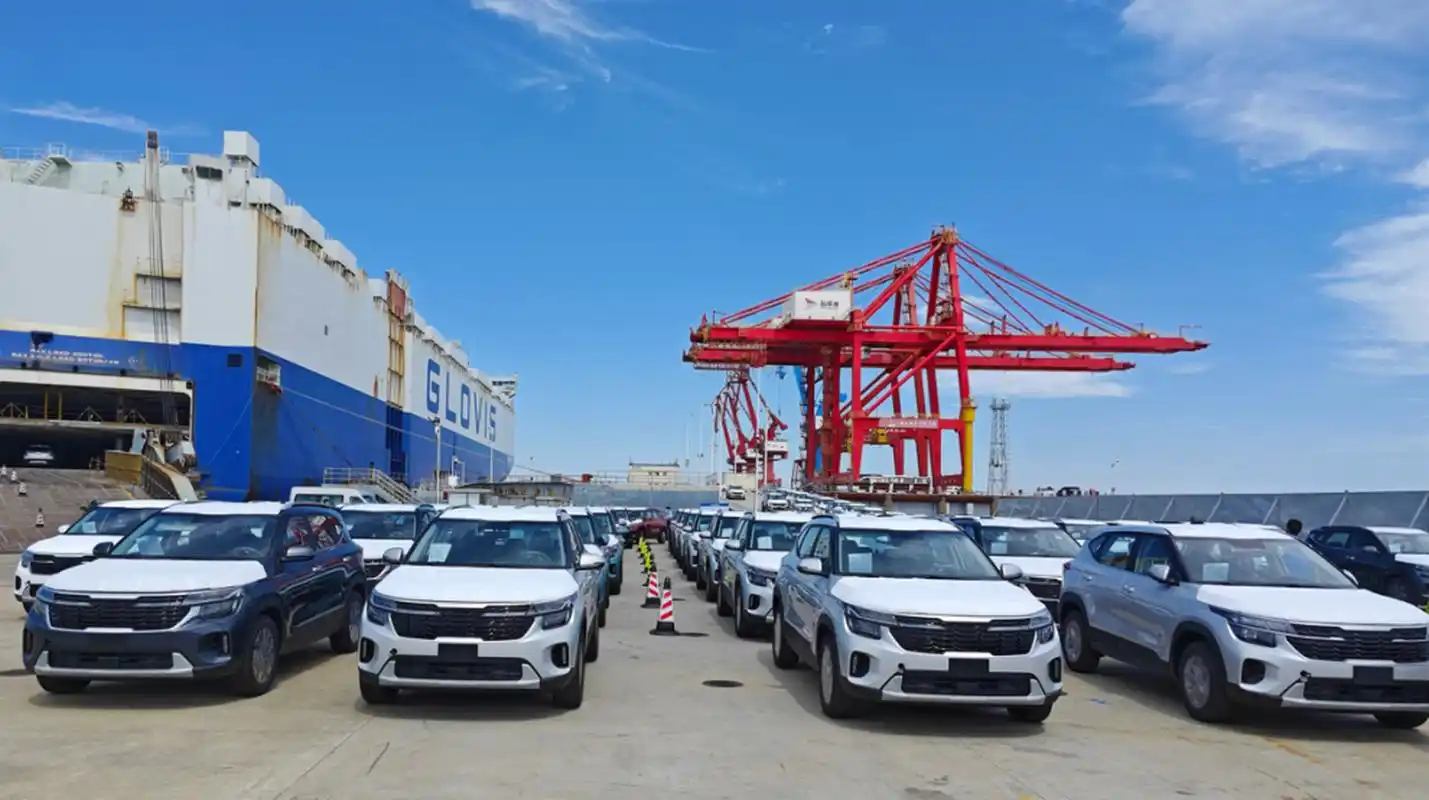
The North African automotive market remains a high-growth, high-demand destination for Chinese vehicle manufacturers and exporters in 2026. As Africa’s largest country by land area, Algeria maintains a stable, regulated automotive import framework under its 2026 Finance Law, with consistent demand for Chinese-made new energy vehicles (NEVs), fuel-efficient passenger cars, and commercial vehicles. Recent months have seen steady bulk deliveries of Chinese buses from leading brands including Zhongtong and Higer to Algeria, supporting the country’s nationwide public transport fleet renewal, with shipments departing from China’s core Ro-Ro hubs: Tianjin, Shanghai, and Guangzhou Nansha.Let’s take a look at how to export cars from China to Algeria in 2026.
If you plan to export cars from China to Algeria in 2026, full compliance with both China’s latest export regulations and Algeria’s non-negotiable import rules is critical to avoid costly customs delays, cargo detention, forced re-export, or financial losses. This official, updated guide breaks down every step, compliance requirement, and mandatory document you need for a seamless, legal export process.
1. China’s Mandatory Export Policies for Vehicles (2026 Official Updates)
Before your vehicles depart Chinese ports, you must fully comply with the latest domestic regulatory requirements for automotive exports, updated for 2026.
1.1 Export License for Pure Electric Passenger Vehicles
Pursuant to Announcement No. 54 of 2025 issued by the Ministry of Commerce of the People’s Republic of China, all pure electric passenger vehicles (covering HS codes 87038011, 87038012, 87038019, including 8703801090) are subject to mandatory export license management, effective January 1, 2026. When submitting your application, ensure the vehicle type is accurately specified as “Pure Electric Passenger Car” to avoid customs rejection and shipment delays.
1.2 Used Car Export Rules in China
China maintains strict, standardized controls on used car exports via a formal “One Batch, One Certificate” system. Non-compliance will result in your shipment being blocked by Chinese customs. Key requirements include:
- Only officially registered and record-filed exporters approved by the Ministry of Commerce under the nationwide open framework are eligible to conduct business; unregistered entities cannot apply for export approval or legally ship used vehicles overseas.
- Each export batch requires a separate, dedicated export certificate, paired with a third-party vehicle inspection and appraisal report from a qualified, accredited institution.
- Eligible record-filed exporters must have certified vehicle appraisers on staff, a fixed commercial operation site, and a complete compliance management system.
Critical Note: Algeria prohibits commercial bulk imports of used passenger cars. This policy is detailed in Section 3 below.
2. Algeria 2026 Automotive Market: Key Opportunities & Official Policy Context
Algeria remains one of the most stable, high-potential automotive markets in North Africa for Chinese exporters in 2026, with clear, verified demand drivers and strict policy boundaries.
| Verified Market Driver | Official 2026 Details |
| Ongoing Public Transport Fleet Renewal | Algeria’s government continues nationwide urban public transport upgrades via regular, formal open tenders for buses and commercial vehicles, creating consistent bulk demand for Chinese commercial vehicle manufacturers. |
| Targeted Tax Incentives for Fuel-Efficient & NEV Models | Under the 2026 Finance Law, vehicles with an engine displacement of ≤1800cc qualify for reduced consumption tax rates. Pure electric vehicles (EVs) are fully exempt from consumption tax, with reduced supplementary tax burdens. Government-procured public transport buses are eligible for full tariff exemptions only via formal, awarded tender processes. |
| Growing Demand for Chinese NEV Brands | Leading Chinese automakers including Chery, Geely, and BYD have established a strong, trusted market presence in Algeria, with rapidly rising demand for affordable, high-quality new energy passenger cars and light commercial vehicles. |
| Regulated, Stable Import Framework | Algeria has maintained consistent core import rules for new vehicles in 2026, with only minor non-critical clearance process streamlining for authorized importers. |
Non-Negotiable Policy Boundary: Algeria has NOT relaxed core import controls for passenger vehicles, nor has it legalized commercial imports of used passenger cars in 2026. Only brand-officially authorized local importers are permitted to import new passenger cars for commercial resale.
3. Algeria’s Mandatory Import Requirements (2026 Official Updated Rules)
Algerian Customs enforces strict, zero-exception rules for all vehicle imports. Non-compliance will result in cargo detention, heavy fines, forced re-export, or auction of your shipment by authorities.
3.1 Vehicle Eligibility & Technical Standards
All vehicles exported to Algeria must meet the following mandatory technical and eligibility requirements, with no exceptions:
| Vehicle Category | Mandatory Eligibility Rules | Additional Technical Requirements |
| New Passenger Cars (Commercial Import) | Manufacturing date ≤ 12 months from entry date; Maximum mileage ≤ 100km; left-hand drive (LHD) only | Diesel passenger cars are FULLY PROHIBITED from commercial import. Minimum Euro V emission standard for fuel-powered models. Hybrid vehicles must complete full emission compliance testing (no exemptions). |
| New Commercial Vehicles (Buses/Trucks) | Manufacturing date ≤ 12 months from entry date; Maximum mileage ≤ 1,500km; left-hand drive (LHD) only | Minimum Euro V emission standard for fuel-powered models. |
| Used Passenger Vehicles | Commercial bulk imports are FULLY PROHIBITED | Only Algerian resident individuals, returning expatriates, and diplomatic personnel with official exemption status may import 1 used passenger vehicle ≤ 3 years old, once every 3 years, for personal use only. |
Critical Labeling Rule: All vehicle labels, technical specifications, and user manuals must be provided in French or Arabic, with permanent, clear “Made in China” marking on the vehicle chassis and documentation.
3.2 Mandatory Certifications & Documentation
The following documents are non-negotiable for Algerian customs clearance, with no post-shipment exceptions accepted:
A. COC Certificate (Certificate of Conformity)
The COC certificate is the core mandatory document for all vehicle imports to Algeria, verifying that your vehicles meet Algerian safety, quality, and environmental standards set by the Algerian Institute of Standardization (IANOR).
- Eligible issuing bodies include SGS, Bureau Veritas (BV), Intertek, and other agencies officially authorized by Algerian Customs.
- Applications require the Algerian importer’s local business registration (RC) number, and may be submitted by the exporter, manufacturer, or importer (no mandatory applicant restriction).
- The process includes a mandatory Pre-Shipment Inspection (PSI) to verify vehicle model, quantity, technical specifications, and labeling compliance. Manufacturers with valid IANOR type approval may apply for a simplified PSI process for bulk shipments of identical, pre-approved models.
- Recommended timeline: Allow 10-15 business days for the full COC application, inspection, and issuance process before your scheduled shipment date.
B. ECTN (Electronic Cargo Tracking Note)
Also known as BSC (Bordereau de Suivi Cargaison), the ECTN is mandatory for all sea shipments to Algeria. It must be obtained, validated, and linked to your bill of lading before the vessel departs the origin port.
C. Certificate of Origin
Must be legalized by the China Chamber of International Commerce (CCOIC), with clear, permanent indication of “Made in China” as the country of origin.
D. Valid Import License
The Algerian importer must hold a valid, in-date import approval issued by the Algerian Ministry of Industry. The importer must be the official, brand-authorized local distributor for the vehicle brand being imported.
- Single-shipment import licenses are typically valid for 6 months from issuance. You must confirm the license is valid and covers your shipment quantity BEFORE loading the vessel.
3.3 2026 Updated Customs Rules for Private Personal Imports
Per Algerian Customs directives extended in early 2026, vehicle imports by eligible private individuals via container must be shipped under groupage mode only. Part load Bills of Lading (Split BLs) are not authorized for personal vehicle imports. Non-compliance will result in containers being detained on board or moved to customs bonded warehouses.
Critical Note: This rule applies ONLY to eligible personal use imports, not commercial vehicle shipments by authorized importers.
4. Step-by-Step Export Process for China to Algeria (2026 Compliant Edition)
Follow this verified, step-by-step workflow to ensure a smooth, compliant export operation when you export cars from China to Algeria in 2026.
Phase 1: Pre-Shipment Preparation (Weeks 1-6)
- Step 1: Verify your Algerian buyer’s official brand-authorized importer status, and confirm their valid, in-date import license from the Ministry of Industry.
- Step 2: Secure payment via an irrevocable Letter of Credit (L/C) issued by a reputable Algerian state-owned bank or major international bank, to mitigate foreign exchange control risks.
- Step 3: Initiate COC certification application with an authorized agency, submit technical specifications and ISO 17025 accredited lab test reports, and schedule the mandatory Pre-Shipment Inspection (PSI).
- Step 4: Prepare all mandatory documentation: commercial invoice, packing list, test reports, legalized Certificate of Origin, and export license application materials for EVs.
Phase 2: Export Declaration & Shipping (Weeks 7-10)
- Step 5: Complete the PSI inspection and receive your final, valid COC certificate before vessel loading.
- Step 6: Submit and obtain your pure electric vehicle export license via the Ministry of Commerce’s online system, if applicable.
- Step 7: Arrange Ro-Ro shipping from China’s core automotive export hubs: Tianjin, Shanghai, or Guangzhou Nansha ports. Standard transit time to Algeria’s main ports (Algiers, Oran) is 35-45 days.
- Step 8: Obtain and validate your ECTN certificate before the vessel departs the origin port.
- Step 9: Complete China customs export declaration with all mandatory documents, and confirm vessel departure.
Phase 3: Algerian Customs Clearance & Delivery (Post-Arrival)
- Step 10: Your local Algerian clearance agent submits the full set of documents (COC, ECTN, Bill of Lading, Certificate of Origin, Import License) to Algerian Customs for clearance.
- Step 11: The importer pays all applicable import duties and taxes before cargo release. Standard comprehensive tax rates for new passenger cars range from 60% (≤1800cc) to 120% (>1800cc), with reductions for eligible EV models.
- Step 12: Vehicles are released from the port and delivered to the importer, with full compliance with local registration requirements.
5. Key Risks & Proven Mitigation Strategies for 2026
Exporting cars from China to Algeria offers significant growth opportunities, but requires proactive risk management to avoid costly losses.
- Risk 1: Payment Delays & Foreign Exchange Control RisksAlgeria maintains strict foreign exchange controls, which can cause delays in L/C payment processing and fund disbursement.Solution: Only use irrevocable, confirmed Letters of Credit (L/C) for all transactions. Avoid CAD (Cash Against Documents) terms unless working with a long-term, fully trusted partner. Prioritize L/Cs issued by major Algerian state-owned banks or top-tier international banks to ensure payment priority. Initiate L/C negotiations at least 2 months before your planned shipment date.
- Risk 2: Customs Detention & Cargo SeizureMissing documentation, non-compliant vehicle specifications, or invalid COC certification are the leading causes of customs detention. After 21 days of detention, cargo may be moved to bonded warehouses or auctioned by authorities.Solution: Finalize and receive your valid COC certificate before vessel loading — post-shipment COC certificates are never accepted by Algerian Customs. Verify all vehicle labels and documentation include French/Arabic translations and permanent “Made in China” marking. Confirm your Algerian importer has completed all bank and tax registration requirements before the vessel arrives in port.
- Risk 3: Non-Compliant Used Car ExportMisunderstanding Algeria’s used car import ban is the single biggest cause of total cargo loss for Chinese exporters.Solution: Do not engage in bulk commercial exports of used passenger cars to Algeria, even if you hold Chinese used car export registration approval. Only ship used vehicles for eligible, officially exempt personal use cases, with full pre-approval from Algerian authorities.
- Risk 4: Import License Expiry & InvalidationAlgerian import licenses have strict validity periods, and may be invalidated if the importer falls out of regulatory good standing.Solution: Verify the import license’s validity and coverage of your shipment in writing, no later than 72 hours before loading. Work with the importer to engage a local legal firm to confirm the license is active and compliant, if needed.
6. Frequently Asked Questions (FAQ)
Q1: Can I commercially export used passenger cars from China to Algeria in 2026?
No. Algeria fully prohibits commercial bulk imports of used passenger cars for resale in 2026. Only eligible private individuals with official exemption status may import 1 used passenger vehicle for personal use, once every 3 years, with strict eligibility requirements.
Q2: What are the official tax rates for vehicle imports to Algeria in 2026?
Algeria uses a comprehensive tax system for vehicle imports, including customs duty, value-added tax, consumption tax, and supplementary taxes. For new passenger cars:
- Vehicles with engine displacement ≤1800cc: Comprehensive tax rate of approximately 60%
- Vehicles with engine displacement >1800cc: Comprehensive tax rate up to 120%
- Pure electric vehicles: Fully exempt from consumption tax, with reduced overall tax burdens
- Government-tendered public transport buses: Eligible for full tariff exemptions via formal awarded tenders
Q3: How long does the COC certification process take for Algeria?
The full COC process (application submission, document review, Pre-Shipment Inspection, and final certificate issuance) typically takes 10-15 business days for compliant, fully documented applications. We recommend initiating the process at least 3 weeks before your planned shipment date to avoid delays.
Q4: Do I need French or Arabic labels on vehicles exported to Algeria?
Yes. All permanent vehicle labels, technical specifications, and user manuals must include French or Arabic translations, with clear “Made in China” marking. English-only documentation and labels will result in COC application rejection and customs clearance failure.
Q5: What is the safest payment method for exporting cars to Algeria?
An irrevocable, confirmed Letter of Credit (L/C) issued by a reputable state-owned or major international bank is the safest and most widely accepted payment method for automotive exports to Algeria. This mitigates risks from foreign exchange controls and payment delays.
Xulosa
The year 2026 offers stable, structured growth opportunities for automotive exporters looking to export cars from China to Algeria in 2026. With consistent demand for Chinese new energy and fuel-efficient vehicles, and a transparent, regulated import framework, the market rewards exporters who prioritize full regulatory compliance.
To ensure a successful, loss-free export process, your core priorities must be:
- Strict adherence to Algeria’s vehicle eligibility rules (new passenger cars only for commercial import, ≤12 months old from entry date, max 100km mileage, LHD only)
- Full compliance with COC certification and pre-shipment inspection requirements
- Accurate, complete documentation for both Chinese export declaration and Algerian import clearance
- Secure L/C payment terms to mitigate foreign exchange risks
- Full verification of your Algerian importer’s authorized status and valid import license
For tailored, end-to-end export solutions — including freight forwarding, COC certification assistance, full compliance verification, and regulatory guidance — contact the Bymotorcar team today.
Relevant news:www.mofcom.gov.cn/zwgk/zcfb/art/2025/art_bb95100982b840fca0fd046fe149bb3e.html
Learn More:bymotorcar.com/news/