Updated: August 2026
Chinese Cars for Morocco: Tanger Med, Homologation and VIN Checks Before Deposit
For Morocco-bound orders, a low China FOB price is useful only if the exact VIN can survive three comparisons: the Moroccan homologation path, the local official-stock benchmark, and the service reality after arrival.
Morocco is not a simple “cheap import” destination. It has strong vehicle ports, a mature new-car market, local assembly, official distributor networks and buyers who already compare Chinese models with Renault, Dacia, Stellantis brands, official BYD stock and other local alternatives. That changes the China-sourcing decision.
A China-market vehicle can still be the right deal. It may offer a trim, battery, body style, price or delivery window that local stock cannot match. But the buyer should not pay a supplier before the VIN, age, conformity documents, port route, software language, charging interface and service plan are checked.
Buyer takeaway:
- Do not compare Morocco-bound vehicles only by FOB price. Compare landed cost, homologation, warranty, parts and resale confidence.
- Before deposit, the Moroccan partner should see the exact VIN, production date, first-registration status and technical file.
- For EVs and smart cars, French/Arabic/English software, charging connector and local diagnostic support matter as much as range.
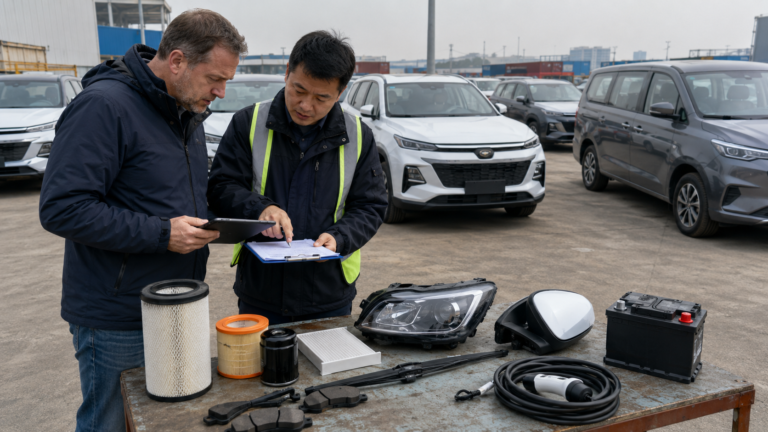
Bymotorcar’s role: Bymotorcar can support the China-side part of a Morocco-bound order: vehicle sourcing, VIN and nameplate evidence, trim and mileage checks, PDI photos or videos, supplier coordination, export-readiness checks, China-side documents, parts-information requests and FOB/FCA/CIF handoff where available. Moroccan customs clearance, TIC/VAT/duty calculation, homologation approval, local registration, plates, insurance, warranty, repair and spare-parts availability must be confirmed by the buyer’s Moroccan broker, importer, homologation adviser, port agent and service partners.
Morocco Is Not a Simple Low-FOB Destination
Morocco’s auto market is large enough, organized enough and competitive enough that a China-sourced vehicle must justify itself. The buyer is not comparing “China price” against an empty local market. They are comparing the China-market VIN against official dealer stock, locally assembled vehicles, financing offers, parts support and warranty expectations.
This is especially important for Chinese brands. BYD, Chery, GWM, Geely, MG, Changan and other brands are no longer unknown to Moroccan buyers. Some have official partners, showrooms or regional positioning. A parallel-import unit from China may look cheaper on paper, but it has to answer a harder question: why should a Moroccan buyer choose this exact vehicle instead of a supported local version?
That does not mean China sourcing is weak. It means the deal must be built around proof. If the VIN is clear, the version is useful, the landed cost still works and local service is planned, direct China sourcing can be a strong route for dealers and fleet buyers.
Tanger Med, Casablanca and the Port Route Before Deposit
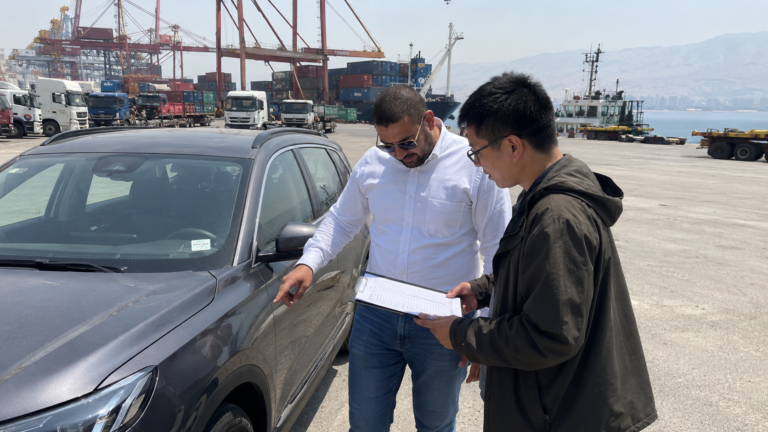
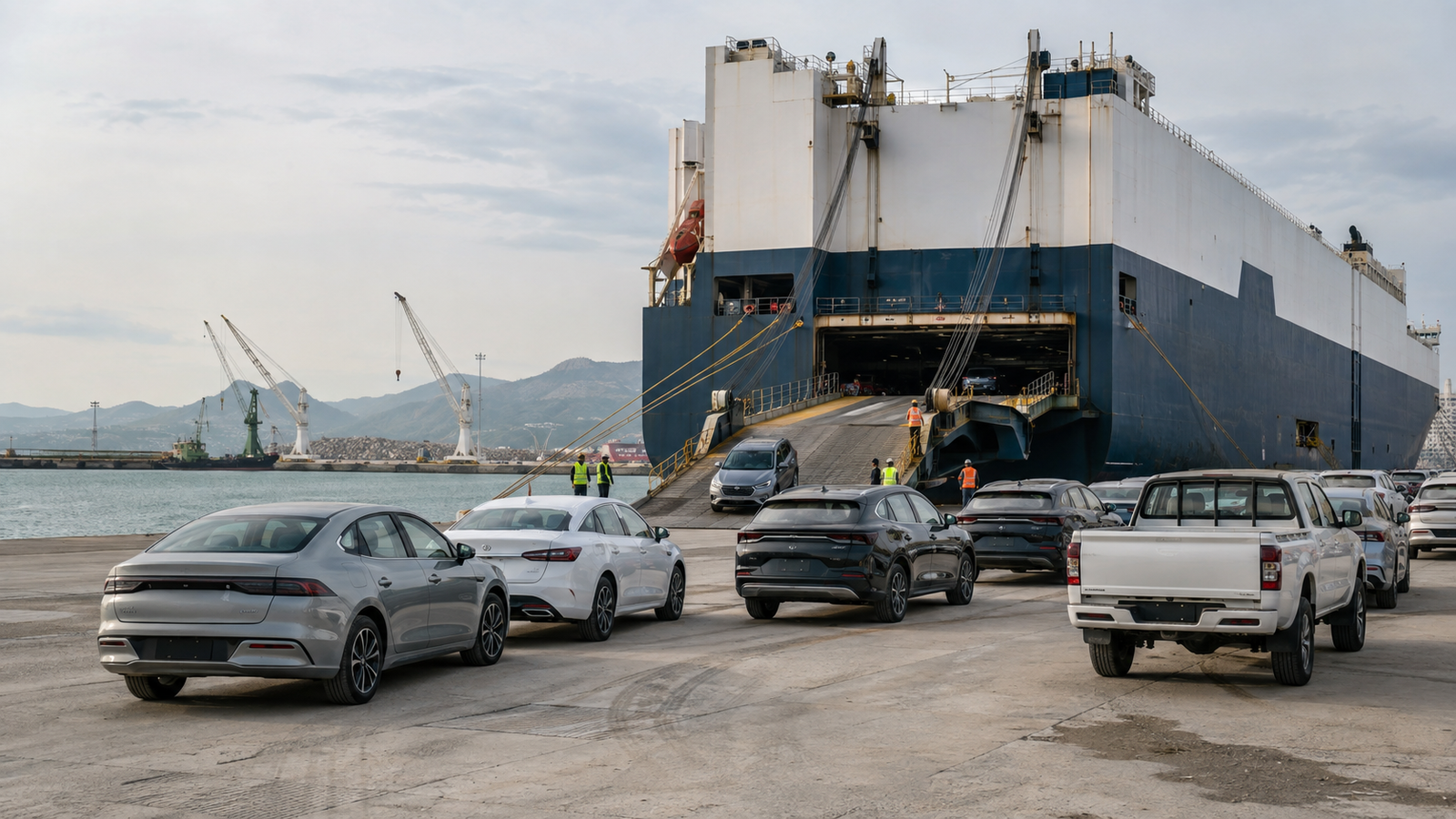
Tanger Med is one of Morocco’s strongest logistics advantages. Its vehicle terminals, Ro-Ro activity and connection to the local automotive industry make it a natural reference point for vehicle flows. Casablanca can also be relevant depending on the shipment, consignee, onward transport and port agent.
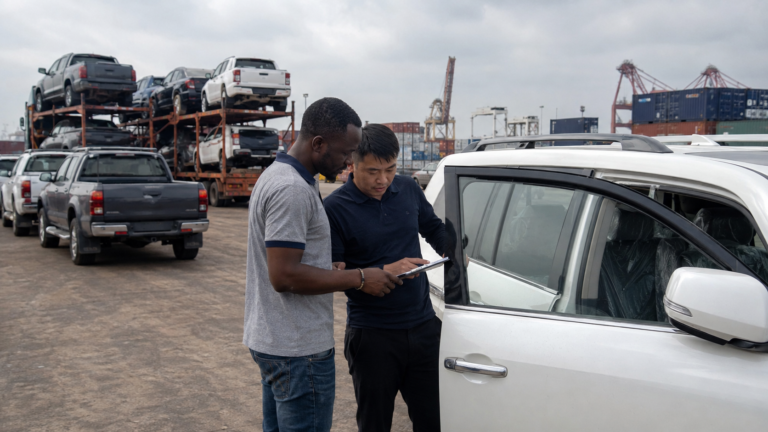
For China-origin vehicles, the buyer should not leave the port route vague. A supplier may quote FOB China, CIF Morocco port, or another handoff structure. Each option changes who controls freight, insurance, port charges, storage risk and document timing.
Before deposit, the buyer should confirm:
- whether the shipment is container, Ro-Ro or another loading method;
- which Morocco port is practical for that vehicle type;
- who controls marine insurance and inland movement;
- whether bill of lading, invoice, consignee and VIN data will match;
- who pays if storage or demurrage occurs after document delay.
Bymotorcar can coordinate the China-side handoff and supplier documents, but route availability, vessel schedule, Moroccan port release and local charges must be confirmed per shipment with the freight forwarder and Morocco-side agent.
Homologation and Registration: Your Moroccan Partner Should See the VIN Early
Morocco is a VIN-sensitive market for imported vehicles. Homologation, technical inspection and registration are not details to handle after the car arrives. The Moroccan partner should review the exact vehicle before it leaves China.
The key issue is not only whether the car is attractive. It is whether that car can pass the Moroccan path: age eligibility, conformity evidence, technical inspection, emissions and safety equipment, customs file, registration documents and language or translation requirements where applicable.
For each VIN, the buyer should ask the Moroccan broker or homologation adviser to review:
- production date and first-registration date;
- new, used, demo or previously registered status;
- certificate of conformity or equivalent technical data;
- emissions standard and engine or battery specification;
- foreign registration document if the unit is used or registered;
- French or Arabic document needs;
- whether registration as a passenger vehicle, commercial vehicle, van, pickup or bus changes the cost and process.
The wrong time to discover a missing COC, unclear first-registration date or unsuitable technical file is after the vehicle is already at port.
Local Assembly and Official Stock Change the Comparison
Morocco has one of Africa’s strongest automotive manufacturing ecosystems. Renault/Dacia and Stellantis production, supplier clusters and port connections give local official stock a real advantage: parts flow, financing, known registration route, after-sales support and resale confidence.
That affects Chinese vehicle sourcing directly. A China-market SUV, EV or van should not only be cheaper than its China brochure price. It should be better than the Moroccan alternative after the buyer includes duties, VAT, TIC, port charges, homologation cost, warranty gap, parts risk and possible downtime.
A useful China-sourced unit usually has at least one clear reason:
- the trim is not available locally;
- local official stock is delayed or overpriced;
- the buyer needs a batch for a specific fleet use;
- the China version has a battery, seating layout, commercial body or equipment package that fits the buyer’s use case;
- the buyer has its own service and parts plan.
If the local official version has a similar landed cost and stronger support, it may be the safer purchase. If the China VIN solves a specific business problem, it can still be worth importing.
What Vehicle Types Actually Fit Morocco
Morocco is not one vehicle-use case. Casablanca and Rabat buyers may look for modern SUVs and EVs. Tourism operators may need vans or shuttles. Logistics companies may need light commercial vehicles. Rural, agricultural or construction users may look at pickups. The right China sourcing decision depends on use, not only brand.
| Buyer type | Possible China-sourced fit | What to check before deposit |
|---|---|---|
| Casablanca dealer | Gasoline SUVs, crossovers, selected EVs or hybrids. | Local official price, homologation, warranty gap, French/Arabic software, parts. |
| Hotel or tourism operator | MPVs, vans, EV vans or shuttle vehicles. | Seat layout, service route, charging if EV, passenger-use registration path. |
| Logistics buyer | Vans, light trucks, delivery vehicles. | Payload, classification, TIC/duty impact, parts and downtime. |
| Agriculture or construction buyer | Pickups and work vehicles. | Suspension, cooling, tyres, ground clearance, service parts and vehicle class. |
Do not turn this decision into a model ranking. For Morocco, a lower-spec vehicle with known parts and registration support may beat a rare China-market trim with better screens but no local service path.
EVs and Hybrids: Useful Where Charging and Service Are Controlled
Morocco is moving toward more electrified mobility, and full EVs are becoming more visible in major cities. But public charging, high-voltage service and parts support are not equally strong everywhere. That makes the buyer profile important.
An EV or PHEV can make sense for a Casablanca or Rabat buyer with home charging, depot charging or a corporate fleet route. It is more difficult for broad resale into smaller cities or rural use unless charging, battery service and diagnostic support are already clear.
China-market EVs need an extra layer of checking. Many domestic-market Chinese EVs use GB/T connectors, while export markets often expect Type 2 or CCS2 infrastructure. Adapter use, AC/DC charging behavior and fast-charging compatibility should be validated for the exact car and local charger network.
Before deposit, request:
- charging-port photos and cable package;
- AC/DC charging information;
- battery size, thermal-management details and 12V battery spec;
- proof of software language and app/account status;
- local high-voltage service plan;
- warranty or battery-support explanation in writing.
French, Arabic, Software and Smart-Car Functions
A China-market smart car can look excellent in photos and still be difficult to sell in Morocco if the interface, maps, app and connected services are not usable. French and Arabic matter for customers. English may be acceptable for some fleet buyers, but Chinese-only screens are a serious resale and support problem.
The buyer should not rely on brochure screenshots. Ask for live photos or videos from the exact vehicle:
- language menu showing French, Arabic or at least English;
- instrument cluster and infotainment software version;
- map screen and navigation behavior outside China;
- mobile app binding and account-region status;
- OTA screen without region errors;
- camera, radar, ACC, lane-assist and ADAS functions;
- charging interface screen for EVs and PHEVs.
For a dealer, software is not cosmetic. If the customer cannot use navigation, connect the app, understand warnings or update the system, the sales problem becomes a service problem.
New, Used, Demo or Registered China Stock: Status Changes the Deal
A China supplier may describe a vehicle as “new” because the odometer is low. That is not enough for Morocco. The buyer needs to know whether the unit is factory-new, demo, previously registered in China, or low-mileage used stock.
Morocco’s import age and homologation logic makes the first-registration date important. The China-side status also affects warranty, documents, export readiness and buyer trust. A registered “zero-mileage” unit can be a real opportunity only when its status is transparent and the Morocco-side path is confirmed before shipment.
Before deposit, collect:
- VIN and nameplate photos;
- production date;
- first-registration date if any;
- odometer photo and PDI video;
- supplier documents proving status;
- refund or substitution terms if that exact VIN fails export or Morocco-side eligibility.
Service, Warranty and Parts Before Price
A China-market vehicle for Morocco is not safe just because it is cheaper. The buyer should know who can repair it, where parts will come from, whether local official dealers will support the VIN, and how warranty claims will be handled.
Official distributor stock has a clear advantage here. A parallel-import VIN may need independent workshops, direct parts orders from China, regional parts sourcing or a private service agreement. That can work for professional buyers, but it must be planned.
Ask these questions before paying:
- Will a Moroccan workshop accept this VIN?
- Can fast-moving parts be identified by VIN before shipment?
- Are body parts, lamps, sensors and glass available locally or only from China?
- Who pays for warranty parts and labor?
- Who diagnoses EV, PHEV or ADAS faults?
- How long can the buyer tolerate downtime?
If nobody can answer these questions, the FOB saving is not yet a real margin.
Morocco Pre-Deposit Checklist for China-Sourced Vehicles
The checklist should answer one Morocco-specific question: will this exact China-market car be importable, homologable, registerable, serviceable and commercially sellable in Morocco?
- Exact vehicle: VIN, nameplate, production date, trim, mileage, market version and status.
- Morocco eligibility: age, first-registration date, emissions standard, COC or technical data, vehicle class.
- Cost path: Moroccan broker calculation for duty, TIC, VAT, parafiscal tax, port charges, homologation and registration.
- Port route: Tanger Med, Casablanca or another route, Incoterms, insurance, B/L data and consignee match.
- EV and software: charging connector, software language, app/OTA status, maps and ADAS behavior.
- Condition evidence: PDI photos/videos, underbody, tyres, spare wheel, tools, charging cable if applicable.
- After-sales: parts route, local workshop, diagnostic capability, warranty terms and downtime plan.
Red Flags Before Paying a China Supplier
- No VIN or nameplate photo before deposit.
- The supplier says “Morocco customs is easy” without broker or homologation review.
- The seller promises Moroccan registration or plates from China.
- The vehicle is described as new but was already registered in China.
- No first-registration date or mileage evidence.
- No COC, technical file or emissions information.
- China-market EV with GB/T connector and no confirmed Morocco charging plan.
- Software is shown only in Chinese, with no French, Arabic or English proof.
- No local service partner or parts channel.
- A local official version exists with warranty and similar total price.
- Invoice, consignee, B/L and VIN data do not match.
- No refund clause if export, homologation or registration fails for that VIN.
- The deal depends on under-invoicing or informal customs shortcuts.
What Bymotorcar Can Verify on the China Side
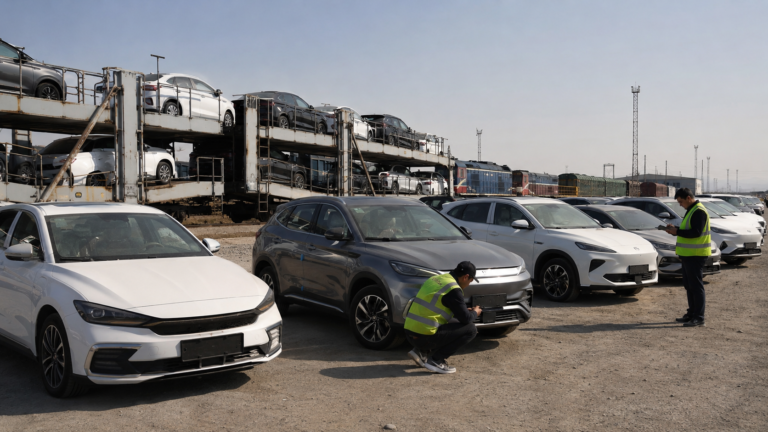
Bymotorcar is most useful before the buyer commits money. We can help identify vehicles in China, collect VIN and nameplate evidence, confirm trim and version, check mileage and status, request PDI photos and videos, coordinate with suppliers and organize China-side export documents.
For Morocco-bound orders, we can also request battery or engine data, charging-port photos, software-language evidence, parts information, service notes where available and export-readiness details for the exact VIN.
This helps the buyer and Moroccan partners make a better decision before shipment. It does not replace customs clearance, tax calculation, homologation, registration, local warranty, repair, insurance, spare-parts availability or official distributor support in Morocco.
FAQ: Chinese Cars for Morocco
Can I import cars from China to Morocco through Tanger Med?
Yes, Tanger Med is a major vehicle and logistics hub, but each shipment still needs a confirmed route, vessel option, insurance plan, port agent and matching documents before the vehicle leaves China.
What age limit applies to used cars imported into Morocco?
Morocco generally applies a five-year age rule for imported used passenger vehicles, but the buyer should have a Moroccan broker confirm the rule for the exact vehicle class and first-registration date before deposit.
Does a China-market car need homologation in Morocco?
Imported vehicles may require homologation or individual approval steps, technical inspection and registration review. The buyer should confirm VIN, COC or technical data, emissions and safety equipment with a Morocco-side adviser before shipment.
Are Chinese EVs suitable for Morocco?
They can be suitable for urban or depot-based use where charging and service are controlled. For broad resale or rural use, the buyer should confirm connector type, software, high-voltage service and battery support first.
Will local official dealers support a parallel-import China-market VIN?
Do not assume that. A local official distributor may support only vehicles sold through its own channel. Parts and warranty coverage for a China-market VIN should be confirmed in writing.
What documents should be checked before shipment?
Invoice, contract, VIN/nameplate evidence, COC or technical data where available, export documents, B/L instructions, registration status, mileage proof and any documents requested by the Moroccan broker or homologation adviser.
When is China sourcing better than local official stock?
It can make sense when the China-market unit offers a clear price, trim, battery, seating, body type or delivery advantage after landed cost and service risk are included. If local official stock is close in total cost and easier to support, it may be safer.
What can Bymotorcar do before I pay a China supplier?
Bymotorcar can help collect China-side VIN, nameplate, PDI, status, mileage, trim, battery or engine, software and parts evidence so your Moroccan partners can review the exact vehicle before shipment.
Sources and Further Reading
- Le Matin: Morocco new-car sales in 2024
- Tanger Med Port Authority: vehicle activity
- NARSA: vehicle homologation in Morocco
- NARSA Services: registration of imported vehicles
- Moroccan Customs: imported vehicle guidance
- Auto Nejma: BYD showroom and service presence in Casablanca
- Tanger Med: ports and logistics overview
- China EV Export: GB/T and CCS charging standards explained
Check a Morocco-Bound Vehicle Before Deposit
Planning to source Chinese SUVs, EVs, vans, pickups or commercial vehicles for Morocco? Send Bymotorcar the target model, quantity, intended use, destination city or port, and any requirements from your Moroccan broker or homologation adviser.
We can help collect China-side evidence for the exact VIN: nameplate, trim, mileage, production date, status, PDI photos or videos, battery or engine details, software proof, charging interface and parts information where available. Your Moroccan partners should then confirm customs, taxes, homologation, registration, port release, warranty, repair and local service for that exact vehicle.