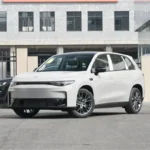
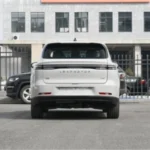
2027 Leapmotor C10 for Sale – 290 km REEV or 660 km Electric SUV
China-Market 2027 Model2027 Leapmotor C10 versions for export buyers
The updated China-spec C10 is offered with two fundamentally different energy routes: a 290 km CLTC range-extender version and a 660 km CLTC battery-electric version. Buyers should select the powertrain before deciding whether the LiDAR equipment package is necessary.
Specifications refer to the 2027 China-market model. Charging performance, software services, driver-assistance functions, seat equipment, wheels, audio system, display functions and promotional option packages must be confirmed against the selected VIN before payment.
The 2027 Leapmotor C10 is a rear-wheel-drive, five-seat family SUV available from China with either a long-electric-range REEV system or a full battery-electric powertrain.
This updated model is not simply a continuation of the earlier C10 with a different model year. It introduces longer driving ranges, more powerful electric motors, revised exterior details, a larger center display, an upgraded cockpit processor and a revised comfort package.
The most important buying decision is therefore not the exterior color or LiDAR badge. Export buyers should first decide whether their destination and use pattern are better suited to the 290 km range-extender version or the 660 km battery-electric version.
View additional Leapmotor vehicles available for export from China or browse the current new-car sourcing inventory.
The real choice: C10 REEV 290 or C10 BEV 660?
The two C10 powertrains can look similar in photographs, but they solve different ownership problems.
Choose the REEV 290 when:
- public charging coverage is incomplete or unreliable;
- the vehicle will regularly travel between cities;
- the buyer wants electric driving in town but gasoline backup on long routes;
- the vehicle may be used in a country where charging-station downtime is common;
- or the lowest acquisition price is more important than eliminating the gasoline system.
Choose the BEV 660 when:
- home, workplace or depot charging is dependable;
- the buyer wants the stronger 230 kW motor;
- electric-only operation is a purchasing requirement;
- the destination has suitable high-power DC charging;
- or the vehicle will be used in a fleet able to plan charging and daily mileage.
The REEV version should not be described simply as a gasoline hybrid. Its wheels are driven by the electric motor, while the 1.5L engine primarily generates electricity when the battery requires additional energy.
The BEV version removes the engine, fuel tank and exhaust-related servicing, but it places greater importance on local charging availability and battery-support capability.
Why the REEV 290 Smart Edition is the lowest-FOB route
The REEV 290 Smart Edition has an official China-market price of RMB 125,800, making it the lowest-priced 2027 C10.
A reasonable public reference for export marketing is approximately USD 19,800 FOB China port. This reference assumes an entry-version vehicle and normal export preparation rather than a guaranteed transaction price.
The final quotation depends on:
- dealer inventory and domestic incentives;
- production date and exterior color;
- whether optional comfort equipment has been installed;
- vehicle mileage and registration status;
- inland movement to the export port;
- inspection and export declaration costs;
- and the document requirements of the destination country.
China-market retail promotions such as financing, replacement subsidies, free domestic data or a home charger should not automatically be treated as transferable export benefits.
The 290 km REEV is not only a “range-anxiety” version
The 38.7 kWh battery gives the C10 REEV more electric-only capability than many conventional plug-in hybrid SUVs. A buyer with regular charging may complete most urban commuting without using gasoline every day.
When the battery charge becomes low, the gasoline generator allows the vehicle to continue travelling without waiting for a charging station. This can be valuable in Central Asia, the Middle East, parts of Latin America and other markets where urban charging may be available but intercity coverage remains uneven.
However, the REEV version also introduces additional systems that the BEV does not have:
- a gasoline engine and fuel system;
- engine oil and filter maintenance;
- an exhaust and emissions system;
- cooling requirements for both the engine and electric system;
- and destination-market questions regarding fuel and emissions classification.
The importer should confirm whether the vehicle will be registered locally as an electric vehicle, plug-in hybrid, range-extended vehicle or another regulatory category.
The BEV 660 is the stronger technical upgrade
The battery-electric C10 uses an 81.9 kWh lithium-iron-phosphate battery and a 230 kW rear motor. Its claimed China-market range is 660 km under CLTC testing.
The 800V architecture is designed to support faster DC charging and reduce charging stops on long journeys. The manufacturer’s approximately 16-minute 30–80% figure assumes a compatible high-power charger, suitable battery temperature and favorable station conditions.
Export buyers should not use the 16-minute claim without checking the actual infrastructure in the destination country. A vehicle with an 800V system can still charge from a lower-output station, but it will not achieve its maximum charging rate.
For private buyers without home charging, the BEV 660 may be less convenient than the range figure suggests. Charging access, station reliability and local electricity pricing are more important than the brochure range alone.
Smart Edition or LiDAR Edition?
Both powertrains are available as a lower-priced Smart Edition and a LiDAR Edition costing RMB 10,000 more in China.
The LiDAR versions add the higher driver-assistance hardware route, including LiDAR and a Qualcomm 8650 assistance platform. They are more relevant to buyers who expect frequent highway use or specifically want the most complete China-market assistance package.
The extra hardware does not guarantee that all navigation-assisted functions will work outside China. Operation can depend on:
- map data;
- local road coverage;
- mobile-network access;
- software region;
- account activation;
- and local legal restrictions.
For an export buyer who primarily needs adaptive cruise control, lane assistance and a 360-degree camera, the Smart Edition may be the more efficient purchase. Paying for LiDAR only makes sense after confirming which functions remain available in the destination country.
China-spec C10 versus an official-market Leapmotor C10
Leapmotor C10 vehicles are also sold through official channels in several overseas markets. Those vehicles should not be assumed to have the same battery, motor, charging connector, software, warranty or homologation package as the China-market 2027 C10.
Parallel-export distinction
A China-spec vehicle may offer a lower procurement price or a newer China-only configuration, but it does not automatically include support from an official Leapmotor or Stellantis dealer in the destination country.
Before importing into a country where Leapmotor already has an official distributor, the buyer should check:
- whether parallel imports can be registered;
- whether official dealers will provide paid servicing;
- whether diagnostic access is available;
- whether parts can be ordered by the China-market VIN;
- whether software accounts can be activated;
- and whether the China charging connector is locally compatible.
A lower FOB price should be evaluated together with local service access, not separately from it.
Charging connector compatibility is a VIN-level check
The China-market vehicle may use charging hardware designed for Chinese GB/T infrastructure. This can differ from CCS2, CCS1 or other connector systems used in overseas markets.
An adapter may solve part of the physical-connection problem, but an adapter alone does not guarantee:
- full DC charging speed;
- correct communication with every charger;
- support for 800V charging;
- safe use at the station’s maximum current;
- or compatibility with local payment and authentication systems.
Before shipment, the supplier should photograph the AC and DC ports, confirm the supplied cable, identify the portable charger and test charging on both AC and DC equipment.
For the REEV version, charging compatibility still matters. Buying the range extender only as a substitute for solving the charging issue can result in the vehicle using gasoline more often than intended.
Five-seat space without moving up to the C16
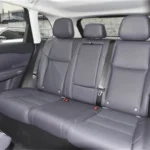
The 2027 C10 measures 4,749 mm long, 1,900 mm wide and 1,680 mm high, with a 2,825 mm wheelbase. It remains a dedicated five-seat SUV rather than attempting to fit a third row into the same body.
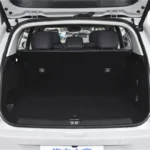
The standard luggage area is approximately 510 litres and can expand to around 1,809 litres with the rear seats folded. Additional underfloor storage helps separate charging equipment, tools and smaller items from the main luggage area.
This format suits a household that normally carries two adults and one to three children, or a buyer who values luggage capacity more than occasional six-seat use.
Customers who regularly require six seats should compare the C16 rather than treating the C10 as a substitute.
The comfort package requires actual-vehicle confirmation
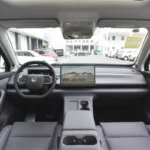
The updated C10 introduces a 17.3-inch 3K center display, Qualcomm 8295P cockpit hardware, revised center-console storage, 50W wireless charging and available comfort equipment such as reclining front seats, ventilation, massage and leg supports.
Some launch benefits in China included an option-package allowance. This means promotional photographs may show equipment that is not necessarily installed on every base vehicle.
Before paying for a vehicle advertised with “zero-gravity seats,” request a video showing:
- driver and passenger seat adjustment;
- electric leg supports;
- lumbar adjustment;
- ventilation and heating controls;
- massage operation;
- and the seat returning safely to the normal driving position.
The same rule applies to the audio system, AR-HUD, panoramic roof, rear table, wheel size and interior material.
Software, account and OTA risks after export
The China-market infotainment and mobile application may depend on a Chinese user account, mobile number, SIM service, mapping provider and regional cloud services.
Before shipment, the exporter should document:
- the current software version;
- available interface languages;
- account-binding status;
- mobile-application access;
- Bluetooth and phone-projection operation;
- offline vehicle controls;
- navigation behavior;
- and whether an OTA update is waiting to be installed.
A third-party language modification should not be described as official factory localization unless it is supported by manufacturer documentation.
Installing unofficial software can affect system stability, future updates or diagnostic support. The buyer should know exactly what has been changed before accepting the vehicle.
2027 C10 pre-shipment inspection checklist
- Model-year identity: verify that the vehicle is a 2027 C10 rather than remaining 2026 dealer stock.
- Energy route: confirm REEV 290 or BEV 660 through the VIN, vehicle label and instrument display.
- Trim: confirm Smart Edition or LiDAR Edition and photograph the roof-sensor area.
- Battery: check battery warnings, charging history where available, state of charge and the absence of high-voltage faults.
- Charging: test AC and DC charging and document the connector, cable and portable charger.
- REEV system: cold-start the generator, check fluids, listen for abnormal noise and confirm stable transition between battery and range-extender operation.
- Software: record language, account status, application access, navigation, network connection and OTA version.
- Driver assistance: test cameras, parking sensors, adaptive cruise functions and any LiDAR-related warnings.
- Comfort equipment: verify each seat, massage, ventilation, heating, leg support, display, HUD and audio function included in the order.
- Suspension: inspect tires, wheel alignment, damping behavior and underbody condition.
- Body condition: inspect paint, glass, lighting, wheels, concealed door handles and transport-sensitive bumper areas.
- Vehicle status: confirm mileage, registration history, insurance history and whether the vehicle has already been transferred domestically.
- Keys and accessories: confirm both keys, tools, charging equipment, manuals and optional accessories.
- Documents: match the VIN across the invoice, vehicle documents, export declaration and shipping documents.
2027 Leapmotor C10 versus the 2026 C10
The 2027 version should not reuse the 2026 C10 product description with only the model year replaced.
Its main changes include:
- REEV electric range increased from 210 km to 290 km CLTC;
- BEV range increased to 660 km CLTC;
- higher electric-motor outputs;
- an 800V platform for the battery-electric model;
- a larger 17.3-inch center screen;
- Qualcomm 8295P cockpit hardware;
- revised exterior lighting and front-end design;
- and broader comfort and chassis upgrades.
If a buyer is offered a heavily discounted C10, the VIN and production label should be checked carefully. A lower price may indicate remaining 2026 inventory rather than the updated 2027 vehicle.
Leapmotor C10 versus Leapmotor C11
The C10 is the more value-focused five-seat family SUV. It offers a long wheelbase, a large cabin and dual powertrain choices without moving into the C11’s higher price and more premium positioning.
The C11 is more appropriate for buyers prioritizing a more advanced suspension layout, premium cabin treatment or a higher position within the Leapmotor range.
The C10 is usually the stronger export proposition when the buying priorities are:
- lower FOB entry cost;
- five-seat family space;
- REEV or BEV flexibility;
- and a simpler trim structure.
Leapmotor C10 versus Leapmotor B10
The B10 is a smaller and less expensive SUV that may be easier to park and more suitable for urban buyers.
The C10 provides a longer wheelbase, more rear-seat space, a larger luggage area and an available range-extender powertrain. It is better suited to family travel and markets where a compact pure EV does not provide enough route flexibility.
Dealers should avoid positioning both models with the same “affordable smart electric SUV” description. The B10 is the urban entry product, while the C10 is the larger five-seat family and intercity product.
Leapmotor C10 versus BYD Song Plus DM-i
The Song Plus DM-i uses a plug-in hybrid architecture with a combustion engine that can contribute differently to propulsion, while the C10 REEV emphasizes electric-motor driving with the engine acting primarily as a generator.
The C10 offers rear-wheel drive, a large 38.7 kWh battery and 290 km of claimed CLTC electric range. The BYD may have wider brand recognition, a larger service footprint in some markets and a more established export history.
The decision should account for local parts supply, software support, charging, fuel use and registration classification rather than relying only on the electric-range figure.
Leapmotor C10 versus Deepal S07
Both vehicles appeal to buyers choosing between full electric and range-extended driving.
The C10 focuses on five-seat space, high equipment value, a 660 km BEV route and a 290 km REEV route. The Deepal S07 may appeal more strongly to buyers who prefer its exterior design, established market presence or local distributor support.
For an exporter, the practical comparison should include:
- current FOB availability;
- battery and charging specification;
- software localization;
- spare-part channels;
- and local customer familiarity with each brand.
Who should buy the 2027 Leapmotor C10?
The REEV 290 is most suitable for a family or business buyer who can charge regularly but does not want long journeys to depend entirely on public charging.
The BEV 660 is more suitable for a buyer with reliable home, workplace or fleet charging who wants the longer electric range, stronger motor and 800V platform.
The C10 is especially relevant to:
- families requiring a spacious five-seat SUV;
- buyers comparing BEV and REEV options at the same time;
- dealers seeking a value-oriented Chinese new-energy SUV;
- fleet operators with planned charging routes;
- and importers who can arrange independent diagnostics and parts support.
It may not be suitable for buyers requiring official destination-market warranty coverage, permanent six-seat use, all-wheel drive or guaranteed operation of every China-based connected function.
Frequently asked questions about the 2027 Leapmotor C10
What is the lowest FOB price for a 2027 Leapmotor C10?
A reasonable public reference is approximately USD 19,800 FOB China port for the REEV 290 Smart Edition. The final price depends on the actual vehicle, export status, options and port costs.
Is the C10 290 a plug-in hybrid?
It is normally described as a range-extended electric vehicle. The rear electric motor drives the vehicle, while the 1.5L gasoline engine is used primarily to generate electricity when required.
Does the 660 km figure use WLTP or CLTC testing?
The 660 km figure is based on the China CLTC cycle. Actual range and any WLTP-equivalent result will be lower and will vary with speed, weather, tires, load and climate-control use.
Can the China-spec C10 use CCS2 chargers?
Compatibility must be checked from the actual charging port and vehicle specification. China-market vehicles may use GB/T hardware, and an adapter does not guarantee full CCS2 performance.
Is the LiDAR Edition worth the extra cost?
It is most relevant to buyers who need the higher assistance-hardware package. Buyers should first confirm whether the related navigation, mapping and connected functions will work in the destination country.
Is the zero-gravity seat standard on every C10?
Do not assume it is fitted from promotional photographs. Seat functions and comfort packages should be confirmed by VIN, configuration sheet and operating video.
Will the Leapmotor warranty remain valid after independent export?
China-market promotional warranty rights may depend on the original owner, vehicle use and domestic service conditions. They should not be presented as an international warranty without written confirmation.
Which version is better for a country with weak charging infrastructure?
The REEV 290 is usually more practical because it can continue travelling with gasoline when charging is unavailable. Regular charging is still recommended to obtain the expected operating-cost benefit.
Can ByMotorCar quote CIF shipping?
Yes. A CIF quotation can be calculated after the destination port, selected version, vehicle quantity and current freight rate are confirmed. Destination taxes and customs clearance are not automatically included.
How can I verify that the vehicle is a 2027 model?
Check the VIN, production label, battery and range display, front-end design, trim name, factory specification and official vehicle documents before payment.
Request a 2027 Leapmotor C10 export quotation
To receive a VIN-specific offer, provide:
- REEV 290 or BEV 660;
- Smart Edition or LiDAR Edition;
- preferred exterior and interior colors;
- required comfort options;
- vehicle quantity;
- destination country;
- and destination port.
The commercial quotation should identify the exact version, production status, FOB or CIF term, inland transport, export handling, shipping route and available document package.
Contact ByMotorCar to check current 2027 Leapmotor C10 inventory and export pricing.
Specifications, promotional benefits and export prices may change. Final information must be confirmed against the selected VIN and written commercial quotation before payment.