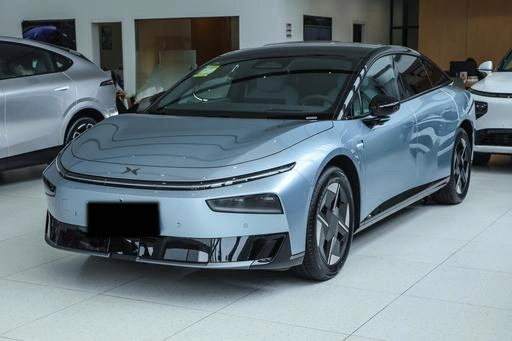
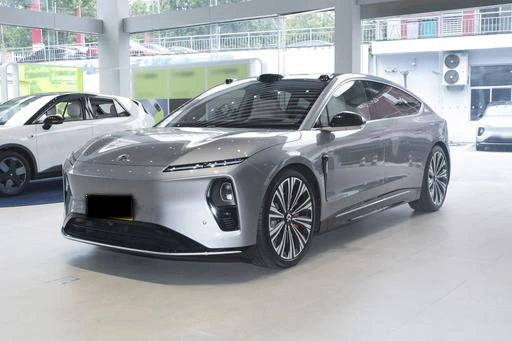
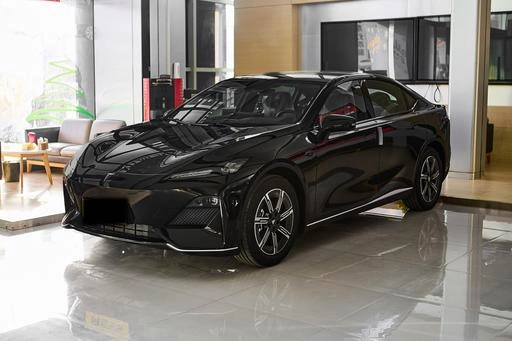
2026 XPeng P7 China-Spec Sedan: Main Export Versions
| Specification | 702 Max | 820 Max | 750 AWD Max | 750 AWD Pengyi Ultra |
|---|
| Official China guide price | RMB 203,800 | RMB 223,800 | RMB 243,800 | RMB 301,800 |
| Estimated lowest FOB China price | from USD 31,800 | depends on battery, drivetrain, wheel option, AI package, color, production date and available stock |
| Model identity | China-spec all-new XPeng P7 electric sedan; not XPeng P7+ extended-range sedan and not the older P7i |
| Vehicle type | pure electric AI luxury sport sedan |
| Steering position | left-hand drive |
| Seats and doors | 5 seats, 4 doors, electric liftback tailgate |
| Length × width × height | 5017 × 1970 × 1427 mm |
| Wheelbase | 3008 mm |
| Rear trunk capacity | 575-1929 L with rear seats folded |
| Front trunk capacity | 56 L, washable front trunk |
| Battery chemistry | LFP | ternary lithium | ternary lithium | ternary lithium |
| Battery and charging platform | 800V high-voltage SiC platform, 5C supercharging AI battery, X-HP 3.0 thermal management with heat pump |
| CLTC electric range | 702 km | 820 km | 750 km | 750 km |
| Energy consumption | 12.0 kWh/100 km | 12.0 kWh/100 km | 13.5 kWh/100 km | 13.5 kWh/100 km |
| DC fast charging time | 10%-80% from 12.0 min | 10%-80% from 11.3 min | 10%-80% from 11.3 min | 10%-80% from 11.3 min |
| Drive layout | MR single-motor RWD | MR single-motor RWD | MAWD dual-motor AWD | MAWD dual-motor AWD |
| Motor power / torque | 270 kW / 465 N·m | 270 kW / 465 N·m | 437 kW / 695 N·m | 437 kW / 695 N·m |
| 0-100 km/h acceleration | 5.8 s | 5.4 s | 3.7 s | 3.7 s |
| Top speed | 230 km/h |
| Suspension form | front virtual-kingpin double wishbone / rear five-link suspension |
| Chassis features | dual-chamber air suspension, intelligent variable damping, AI intelligent chassis |
| Tire width | front 245 mm / rear 275 mm staggered tire setup |
| Standard AI driving hardware | 1 Turing AI chip, 750 TOPS effective computing power, HD cameras, ultrasonic radar, millimeter-wave radar, high-precision positioning and inertial navigation |
| Ultra SE upgrade route | optional upgrade: 2 Turing AI chips, 1500 TOPS and second-generation VLA | not the main buyer reason; Pengyi doors are the identity |
| Ultra upgrade route | optional upgrade: 3 Turing AI chips, 2250 TOPS, VLA and VLM-related cockpit functions | Ultra positioning with Pengyi front doors |
| Cockpit chip | Qualcomm Snapdragon SA8295P |
| Cabin screens | 87-inch AR-HUD, 15.6-inch three-axis moving center screen, 8-inch rear entertainment screen, 8.8-inch sport instrument display |
| Audio and comfort | 23-speaker audio, front seat massage/ventilation/heating, rear seat heating, 50W dual wireless charging, fragrance system |
| V2L external power | 6 kW, adapter may require separate purchase depending on stock and destination package |
| Export buyer logic | lowest FOB route and LFP battery simplicity | longest CLTC range and best sedan efficiency story | performance route with 3.7 s AWD | image-led Pengyi door flagship, not the volume choice |
FOB reference is calculated from the official China guide-price structure and normal export handling assumptions. Limited-time purchase benefits, subsidies, finance offers and temporary option discounts are not used as the public lowest-price base.
The 2026 XPeng P7 is not the P7+ or the old P7i
The 2026 XPeng P7 price in China starts from RMB 203,800 for the 702 Max version. For export buyers, the first job is to keep the model identity clean: this is the all-new China-spec P7 electric sport sedan, not the larger XPeng P7+ with extended-range and pure-electric routes, and not the older P7i sedan.
That distinction matters because the export buyer is usually comparing the P7 against Zeekr 007, Xiaomi SU7, BYD Seal, IM L6 and other China-market electric sedans. The P7’s strongest angle is not only price. It combines a 5017 mm body, 3008 mm wheelbase, 800V architecture, 5C charging, a liftback-style trunk and XPeng’s latest AI driving story in one sedan body.
702 Max or 820 Max: the real export split
The 702 Max is the lowest FOB route. It uses an LFP battery and keeps the same long body, 800V platform and 270 kW rear-drive setup as the 820 Max. For buyers who mainly want a smart-looking electric sedan at the lowest landed-cost base, this is the simplest version to explain.
The 820 Max is the cleaner premium-stock version. It moves to a ternary lithium battery and gives the longest official CLTC range in the current P7 lineup. If the destination market asks about long-distance driving, ride-hailing sedan value or range-per-dollar, the 820 Max usually carries the least explanation risk.
AWD versions are about power, not only prestige
The 750 AWD Max and 750 AWD Pengyi Ultra move the P7 from 270 kW rear drive to 437 kW dual-motor AWD. The 3.7-second acceleration number changes the buyer profile: these versions are for customers who ask about performance, chassis control and showroom impact, not only low purchase cost.
The Pengyi Ultra should be treated as a visual flagship. Its wing-door identity can help a dealer create attention, but it is not the safest volume unit. For most export inventory, the 820 Max is easier to stock and explain; the Pengyi Ultra should be tied to a buyer who already wants the drama.
What owner discussions change before export
Owner and community discussions around the new P7 focus less on whether the car feels modern and more on how its headline technology should be used in real life. Range comments usually circle around CLTC expectations, highway speed, air-conditioning load, wheel choice and parked energy use such as sentry mode. This supports a careful export message: 820 km CLTC is an official comparison number, not a promised highway distance in every country.
The second topic is AI driving and OTA timing. XPeng’s second-generation VLA is a key selling point, but overseas buyers should understand that map coverage, feature availability, language support, OTA rollout and local driver-assistance rules may not mirror China. For export use, the P7 is strongest when sold as an advanced China-spec EV sedan first, with AI functions presented as configuration-dependent technology rather than a universal overseas guarantee.
Best export version reading
For a first P7 order, the 820 Max is the most balanced route because it carries the longest range story without entering the higher-cost AWD or wing-door trims. The 702 Max is useful when a buyer is price-sensitive and accepts the shorter official range. The 750 AWD Max fits performance-focused sedan customers. The 750 AWD Pengyi Ultra is best used as a display or VIP-interest unit, not as the default procurement choice.
Buyers comparing XPeng and other China electric sedans can review the current XPeng export stock. Factory model positioning can also be checked on the official XPeng P7 page.