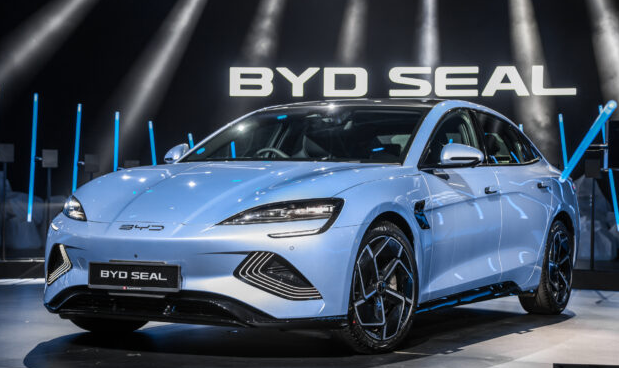
For international car dealers, the conversation around profit margins has changed. As a China auto exporter with 10+ years experience shipping 5,000+ units annually to 40+ countries, we see this shift every day on the ground. The single biggest driver as of Q2 2026 is the aggressive automotive B2B pricing coming out of China, and no vehicle illustrates this better than the BYD Seal. Its wholesale price isn’t just competitive; it’s forcing a complete re-evaluation of floor planning and strategy for dealers accustomed to Japanese and Korean EV models.
For dealers in some regions, the margin potential is enormous. For others, local market dynamics create a different picture. Understanding the real Free-On-Board (FOB) price is just the first step. The real money is made—or lost—in the details that follow. We just moved over 190 units through the Port of Nansha last quarter, and the primary discussion with every buyer is how to maximize the cost advantage presented by vehicles like the Seal. If you’re sourcing fleet inventory, explore our BYD wholesale inventory for current availability and FOB pricing.
BYD Seal FOB Price vs. Competitors: A Q2 2026 Breakdown
The current commercial metrics show a distinct structural gap. Theoretical prices are useless; real-world, landed costs are what matter to your bottom line. As of June 2026, the BYD Seal wholesale price is shaking up the established order.
A practical working estimate for a new 2026 base model BYD Seal, sourced at container volume, is approximately $32,000–$33,000 USD per vehicle FOB from a major Chinese port like Shanghai. This is corroborated by multiple export data sources and wholesale lists, with some European configurators showing certain trims as low as $30,000 USD FOB. This FOB price is the baseline before ocean freight, insurance, duties, and taxes.
Now, let’s compare that to its direct Hyundai Ioniq 6 competitor. In Southeast Asia, after backing out typical 5-8% dealer gross margins from retail prices according to industry dealership margin studies, the estimated dealer acquisition cost for a comparable Ioniq 6 lands in the $40,000–$47,000 USD range. The math is brutal. The Seal starts with an $8,000 to $15,000 per-unit advantage before it even leaves the port. This is a 20-30% lower cost basis, a staggering figure when typical dealer margins hover in the single digits.
The story is similar when looking at the Chinese EV vs Japanese EV dynamic, specifically against the Toyota bZ4X. In a market like Thailand, official Toyota pricing documented by regional automotive analysts puts the dealer acquisition cost for a bZ4X at an estimated $43,000–$45,000 USD. Again, the BYD Seal has a $10,000+ cost advantage.
However, the situation is not universal. In South America, the numbers flip. Toyota has priced the bZ4X aggressively in Chile, with dealer costs estimated as low as $26,000–$27,500 USD according to Chilean new-car market data. In this specific market, the bZ4X actually undercuts the Seal’s FOB price plus shipping.
ByMotorcar Strategic Takeaway: The Customs Valuation Markup Trap. Here’s a costly mistake we see new importers make. Warning: Customs can re-value your shipment 6-12% higher than your invoice. You declare a BYD Seal at $32,000 USD, but the customs authority in your country decides its ‘fair market value’ is $35,000. You are now paying duties and taxes on that higher, arbitrary value. On a $32k car with a 25% import duty, that’s an extra $750 in tax you didn’t budget for. Per car. This is the Customs Valuation Markup Trap, and it can silently destroy your profit margin. We help our clients mitigate this with correct and complete documentation, but you MUST budget for this possibility.
How Does the BYD Seal Affect Car Dealer Margins Regionally?
The FOB price is only half the story. The true impact on car dealer margins depends entirely on the destination market. The battle between Chinese, Japanese, and Korean EVs is being fought on a country-by-country basis, defined by local taxes and trade agreements.
The Southeast Asian Opportunity
In Southeast Asia, the math is simple and powerful. With a cost advantage of $8,000 to $13,000 per unit, dealers have two clear paths to profit:
- Maintain Price Parity & Maximize Margin: Price the BYD Seal near the retail price of an Ioniq 6 or bZ4X. Instead of a standard 5-7% gross margin, you could potentially realize a margin in the 20-25% range. This is almost unheard of for new car sales.
- Aggressive Pricing & Volume Strategy: Undercut the Japanese and Korean competition by $5,000-$7,000 at retail. You would still maintain a healthier-than-average margin while rapidly capturing market share. This strategy puts immense pressure on incumbent brands.
Frankly, this cost structure is why we’re seeing legacy automakers scramble to adjust their EV strategies in the region. The BYD FOB price makes the Seal a high-margin hero product for any dealership that can secure supply.
The South American Puzzle
South America, particularly markets like Chile, presents a more complex scenario. As noted, Toyota’s tactical pricing on the bZ4X means a dealer’s acquisition cost there is lower than a Seal’s imported cost. A BYD Seal at $33,000 FOB plus roughly $1,100 in sea freight per unit (based on current container shipping rate data) lands at over $34,000 before duty. Compared to a local dealer cost of ~$27,000 for a bZ4X, the Seal is at a disadvantage.
This doesn’t mean the Seal can’t compete. It means the strategy must change. In these markets, the Seal must be positioned as a more premium, feature-rich alternative to justify a higher price point, or importers need to negotiate volume discounts that bring the FOB price down. The blanket ‘it’s cheaper’ argument doesn’t work everywhere.
2026 Dealer Acquisition Cost Comparison (USD)
| Vehicle Model | Region | Estimated Dealer Acquisition Cost | Margin Difference vs. BYD Seal |
|---|---|---|---|
| BYD Seal (Base) | FOB China Export | ~$32,500 | Baseline |
| Hyundai Ioniq 6 | Southeast Asia | ~$43,500 | ~$11,000 Advantage for BYD |
| Toyota bZ4X | Southeast Asia | ~$44,000 | ~$11,500 Advantage for BYD |
| Toyota bZ4X | South America (Chile) | ~$27,000 | ~$5,500 Disadvantage for BYD |
Navigating Beyond FOB: Payments and Logistics
Securing a great BYD Seal wholesale price is the start. Getting the cars from the factory to your showroom floor efficiently is where experienced partners make a difference. Our operations team handles clearance and loading at 7 major Chinese ports including Nansha, Tianjin and Shanghai, and we’ve learned a few things.
One area of hidden cost is Letter of Credit friction. While L/Cs provide security, they can be slow and unforgiving. A tiny discrepancy in the paperwork can cause a payment delay, which means a shipping delay. This ties up your capital and pushes back your delivery dates. For repeat clients, we often transition to Telegraphic Transfers (T/T) to accelerate the process by 3-5 business days. This costs money. Delays cost more.
Unlike most exporters who require you to order a full container, ByMotorcar offers an MOQ of 1 Unit. This preserves your working capital, allowing you to test a new model in your market without tying up $100,000+ in a blind container order. If you’re considering adding BYD models to your inventory, browse our full BYD wholesale lineup for current stock and pricing.
For independent distributors, the choice is clear: the BYD Seal’s FOB price point creates a clear and compelling margin opportunity for dealers, especially in Southeast Asia. However, realizing that profit requires careful management of EV import costs, a deep understanding of regional market differences, and a strategy to avoid pitfalls like customs re-valuation. For a detailed breakdown of what the landed cost would be for your specific country, it is best to get personalized BYD wholesale pricing data from our expert team.
Frequently Asked Questions
What is the typical BYD Seal wholesale price for export in 2026?
As of Q2 2026, the working BYD Seal wholesale price for a new base model is approximately $32,000 to $33,000 USD on a Free-On-Board (FOB) basis from major Chinese ports. This price is per vehicle for container-scale orders and excludes shipping, insurance, and destination import duties. Pricing data is compiled from multiple Chinese export wholesale sources and verified against European importer configurators.
How does the BYD Seal wholesale price create better car dealer margins?
In markets like Southeast Asia, the Seal’s ~$32.5k FOB price is $8k-$13k lower than the estimated dealer acquisition cost of competitors like the Hyundai Ioniq 6 (~$43.5k) and Toyota bZ4X (~$44k). This massive cost advantage allows dealers to either significantly undercut competitor retail prices to gain market share or sell at a similar price and realize a much higher gross profit margin per unit. Industry data shows typical new-car dealer margins run only 5-7%, making this structural advantage particularly valuable.
Are there hidden EV import costs beyond the BYD Seal wholesale price?
Yes. Beyond the FOB price, dealers must budget for ocean freight (~$900-$1,300 per car), insurance, destination port fees, and import duties/taxes. A critical hidden cost is the ‘Customs Valuation Markup Trap’, where local customs may assess your car at a higher value than your invoice, increasing your tax liability unexpectedly by $500-$1,000+ per unit. Experienced exporters help mitigate this through complete and accurate documentation, but dealers should always build a contingency into landed cost calculations.
Can I order just one BYD Seal at a wholesale price?
While many exporters require a minimum order of a full container (3-4 units), ByMotorcar offers a Minimum Order Quantity (MOQ) of 1 unit. This provides a significant cash-flow advantage, allowing dealers to test new models in their market without committing over $100,000 USD to a full container load, thus reducing inventory risk. This is particularly valuable when evaluating whether the BYD Seal will resonate with your local customer base.
ByMotorCar internal guide
Related China car sourcing pages
Continue comparing inventory categories, inspection steps and export planning resources.