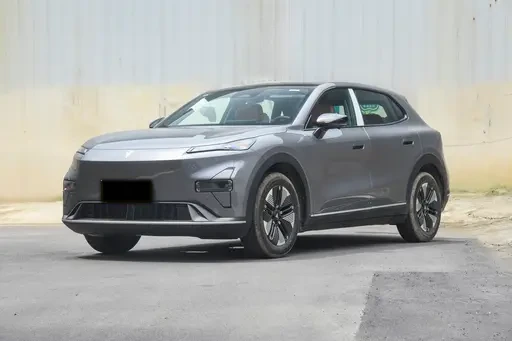
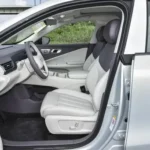
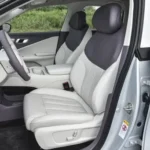
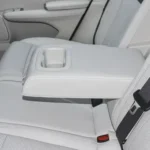
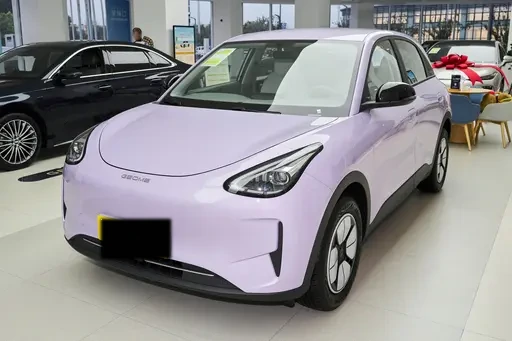
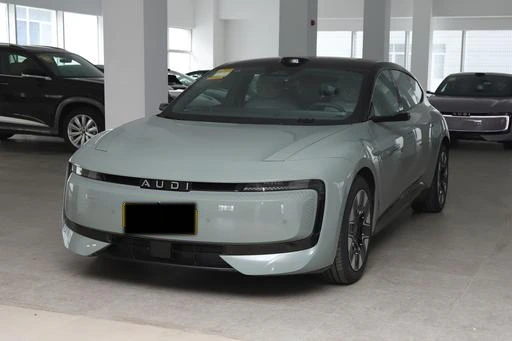
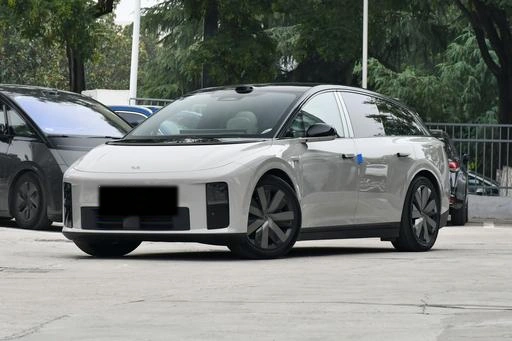
On smaller screens, swipe sideways to review all eight versions.
2026 Deepal S05 price FOB references currently start near USD 14,900 for a new 520Plus-class battery-electric vehicle supplied from China. That figure is an indicative market entry point rather than a standing offer: production date, exact trim, colour, stock source, export documents and departure port must match before two quotations are comparable.
The 2026 range contains more than one type of S05. Seven BEV grades divide between 520 and 620 km CLTC, while the 215Max uses a petrol range extender and a much smaller traction battery. An importer choosing only by the S05 badge could therefore receive a vehicle with a different charging routine, luggage layout and fuel requirement from the product originally discussed.
The 520Lite saves money by removing equipment, not performance
Deepal added the 520Lite after the main 2026 launch. It keeps the 200 kW rear motor, 56.12 kWh CATL LFP battery, 520 km CLTC rating and 6.28-second acceleration of the other 520 versions. The reductions concern the panoramic roof, electric blind, Qualcomm 8155 cockpit chip, CarPlay support, 50 W wireless charging, HOD steering wheel and curtain airbags.
This makes the Lite suitable for a price-led fleet only when the missing items are accepted in writing. The lower grade should not be described to a retail customer with photographs or equipment text from a Max or Ultra. A supplier should show the working screen, roof, airbags section, key set and charging equipment from the actual VIN before invoicing.
Plus, Max and Ultra change the cabin more than the powertrain
Across both battery sizes, Plus is the straightforward equipment tier. Max adds the features buyers notice every day: powered tailgate, AR head-up display, more capable mirrors, heated and ventilated front seats, driver memory and a passenger leg rest. Ultra moves toward a showroom specification with the rotating Sunflower display, zero-gravity passenger seat, driver massage, expanded audio and ambient lighting.
The suffix therefore answers a different question from the range number. A 620Plus travels farther on the Chinese test cycle than a 520Ultra, but the shorter-range Ultra can still have the richer interior. Dealers comparing stock must keep battery family and equipment tier in separate columns rather than treating every higher numeral as a universally higher specification.
The 620 battery buys distance, not extra motor output
The 620 versions raise usable trip margin through a 68.82 kWh pack while retaining the same 200 kW and 320 Nm rear-drive layout. Their declared 0–100 km/h time is slightly slower at 6.48 seconds because the larger battery adds mass. For markets with long intercity routes or irregular public charging, the extra CLTC allowance may be commercially easier to explain than another comfort option.
Neither 520 nor 620 should be presented as a guaranteed real-world distance. Highway speed, heat, cold, elevation, tyre pressure and air-conditioning load change consumption. The official global S05 also uses market-specific ratings and hardware, so a WLTP figure from an overseas model must not be pasted onto a China-market VIN.
The 215Max EREV solves a different infrastructure problem
The 215Max combines a 28.39 kWh LFP battery, 175 kW rear drive motor and a 1.5-litre generator. Its 215 km CLTC electric rating can cover routine urban use, while the published combined figure reaches 1,310 km when petrol generation is included. It is relevant where charging coverage is incomplete but buyers still want electric drive at the wheels.
That flexibility brings a different compliance file. The destination may classify the EREV as a hybrid rather than a zero-emission BEV, changing duty, registration, emissions evidence or access to incentives. The engine also occupies the space used by the BEV frunk. A commercial comparison must include fuel rules and documentation, not just total range.
Fast charging still depends on the station and the connector
The 2026 specifications publish roughly 15 minutes from 30% to 80% for the listed battery versions under suitable conditions. Charging time at the destination will depend on station output, pack temperature, state of charge and interface compatibility. A domestic China unit normally carries GB/T; it should never be advertised as CCS2 merely because an official export-market S05 uses another connector.
Before shipment, the evidence set should cover both AC and DC ports, the portable cable, rated input, dashboard language, account activation, navigation and OTA behaviour outside China. Adapters require a technical assessment and do not automatically reproduce native communication, locking or temperature-control functions.
China specification and global specification are not interchangeable
Changan presents the S05 as a global C-SUV, and its overseas versions show that the platform can be configured for different markets. The official Global Changan S05 introduction describes a 68.8 kWh export vehicle, but that does not turn a Chinese 620Ultra into the same car. Suspension tuning, software, steering side, safety approvals, charging inlet and warranty channel may differ.
The later refreshed S05 adds LiDAR-equipped versions and different trim names. Those later vehicles must not be mixed with the 2026 Plus, Max and Ultra table above. Model year, production month and complete Chinese trim name should appear on the proforma invoice and be checked against the VIN label before payment.
How to shortlist a 2026 Deepal S05 for export
Choose 520Lite only for a controlled price-led order; 520Plus for a practical entry BEV; 520Max for balanced retail equipment; and 520Ultra for a higher-spec display vehicle. The corresponding 620 grades suit buyers who value battery margin. The 215Max belongs in markets where the range-extender route is legally and commercially clearer than relying on public charging.
Importers can review other related vehicles through the Changan and Deepal selection from Bymotorcar. Once the powertrain and trim are fixed, the Bymotorcar export team can check available stock, VIN evidence, PDI media, charging interface, document scope and the applicable FOB departure port before a deposit is requested.