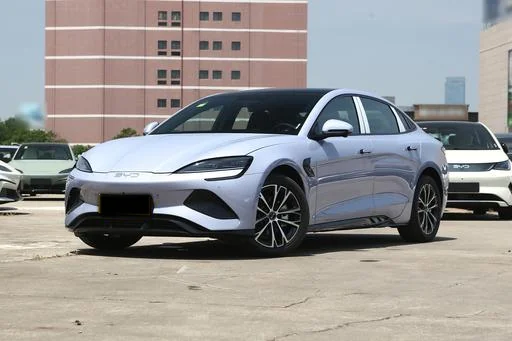
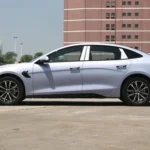
BYD Seal 2025 — electric sport sedan price, 510/650 km versions and FOB export from China
Electric sport sedan export guideBYD Seal 2025: 510, 650, smart-driving and AWD versions for overseas EV sedan buyers
BYD Seal 2025 is a mainstream electric sport sedan from China for private EV buyers, dealers, tech-focused sedan customers and Tesla Model 3 shoppers. Before export, the exact car should be checked by VIN, 510/650/600 km version, battery pack, charging port, software language, smart-driving hardware, body condition, documents and destination-market charging plan.
Note: this table is based on public China-market and export-relevant information. Actual availability, trim name, battery pack, charging port, software language, smart-driving hardware, documents and destination-country registration must be confirmed by VIN before order.
BYD Seal 2025 is a mainstream electric sport sedan from China for buyers who compare Tesla Model 3, BYD Seal, XPeng P7, Xiaomi SU7 and other technology-focused EV sedans. It is not a budget DM-i fuel-saving sedan like BYD Destroyer 05, and it is not a premium German-brand liftback like BMW i4. The Seal page should focus on pure EV range, RWD/AWD choice, smart-driving hardware, battery and charging checks, sport-sedan body condition and dealer-stock value.
For overseas buyers, BYD Seal is attractive because it combines a relatively accessible China-market price, LFP Blade Battery, 510/650/600 km CLTC range choices, e-Platform 3.0 Evo, sporty sedan styling and BYD’s strong EV brand recognition. The export decision should start with the exact version: 510 for lower-entry stock, 650 for longer range, smart-driving versions for technology-focused buyers and AWD for performance customers.
If you are comparing electric sedans from China, you can browse more electric cars from China, BYD cars from China or review other new cars from China. For BYD Seal, the right choice depends on range expectation, charging infrastructure, software needs, smart-driving expectations and whether the buyer wants value, technology or performance.
Lowest FOB reference for BYD Seal 2025 510 Intelligent Voyage Edition
The lowest export route for the 2025 BYD Seal is the 510 Intelligent Voyage Edition. A practical starting reference is about USD 26,800 FOB China port, depending on current stock, color, production date, dealer source, inland logistics, export documents and port arrangement.
This FOB number should be treated as a China-port export reference, not the final landed cost for the buyer. Ocean freight, marine insurance, import duty, VAT, destination customs clearance, local inspection, registration, local transport and dealer margin should be calculated separately for the destination country.
For website display, a clean buyer-facing line can be: 2025 BYD Seal from USD 26,800 FOB China port. The 650 km, smart-driving and AWD versions should be quoted separately because battery pack, hardware, equipment and stock price are different.
Why BYD Seal is a pure EV sport sedan, not a DM-i hybrid sedan
BYD Seal and BYD Destroyer 05 are both BYD sedans, but they answer different buyer questions. Destroyer 05 is for buyers who want DM-i fuel saving, gasoline-backed range and a lower entry price. BYD Seal is for buyers who want a pure electric sedan with stronger acceleration, sportier styling, longer EV-only driving and a more direct Tesla Model 3 comparison.
This distinction matters for export dealers. A Destroyer 05 buyer may ask about fuel consumption, engine service and 55KM versus 120KM PHEV use. A Seal buyer will ask about battery size, CLTC versus real range, fast charging, GB/T compatibility, software language, ADAS hardware, tires, low-body protection and whether the car can compete with Tesla or other EV sedans in the local showroom.
For markets with stronger charging access, BYD Seal can be easier to sell as a real EV sedan. For markets with weak charging infrastructure, dealers should explain charging planning carefully or recommend a DM-i alternative if the buyer is not ready for full EV ownership.
510, 650 or AWD: choosing the right Seal by buyer type
The 510 version is the lowest-cost route and the best starting point for price-sensitive EV sedan buyers, first-time EV customers and dealers who want BYD Seal stock without pushing the retail price too high. It is also the version behind the lowest FOB reference.
The 650 version is better for customers who want more range margin, more confidence for intercity travel and a stronger EV sedan sales story. It usually fits private buyers and dealers who need a broader product explanation than “lowest price.”
The smart-driving versions should be selected when the buyer values advanced driver-assistance hardware, ADAS perception, showroom technology appeal and a stronger comparison with Tesla Model 3 or XPeng P7. However, smart-driving functions must be explained carefully outside China.
The AWD version is the performance route. It can attract showroom attention, but buyers should check tires, wheels, brakes, suspension, underbody condition, insurance cost and destination-market service support before order.
Battery, charging and real-world range planning for export markets
BYD Seal’s published CLTC range is useful for version comparison, but the real range in an export market depends on speed, climate, tires, wheel size, road conditions, air-conditioning, heating, driver behavior and charging habits. Dealers should not sell the car only by the largest number in the brochure.
The 510 version can be enough for city and suburban buyers with regular charging access. The 650 versions are stronger for customers who drive longer routes or need more confidence between charges. The AWD version gives stronger performance but may use more energy in aggressive driving.
Charging compatibility is a key export item. A China-market Seal should be checked for charging port, cable set, AC charging, DC charging, GB/T hardware and whether the destination country needs a Type 2, CCS2 or other adapter plan. This should be discussed before final payment, not after the car arrives.
Smart-driving, DiLink and software expectations outside China
BYD Seal 2025 has a stronger technology story than many lower-cost EV sedans. Smart-driving versions, ADAS menus, cameras, sensors, possible LiDAR hardware and BYD’s DiLink interface can help dealers create a more attractive showroom explanation. But China-market software should still be checked on the exact vehicle before export.
Before shipment, verify screen language, dashboard language, Bluetooth, camera view, navigation, OTA menu, voice assistant, ADAS menu, parking functions, warning messages and phone connection. If the buyer expects English interface, local maps, app access or full smart-driving behavior, this must be confirmed with photos or videos of the actual car.
A responsible dealer should explain that driver-assistance functions are support systems, not a promise of autonomous driving in every country. Some functions may depend on software version, maps, online services, calibration, road markings and local regulation.
China price, FOB and export cost: why Seal needs version-specific quoting
China retail pricing is useful for understanding BYD Seal’s position against Tesla Model 3 and other EV sedans, but it is not the same as an export transaction price. FOB and CIF depend on exact version, stock source, color, production date, battery pack, smart-driving hardware, inland logistics, export documents, port, shipping route and destination-country registration requirements.
For dealers, the version changes the sales role. The 510 version can be a lower-entry showroom car. The 650 version can be used for range-sensitive buyers. The smart-driving version helps with technology positioning. The AWD version is more suitable for performance customers and showroom display.
Before final payment, request a VIN-based quote with photos of the exact vehicle, nameplate, odometer, battery information, charging port, dashboard status, DiLink screen, ADAS menu, tires, wheels, underbody, trunk, body panels, keys, accessories and export documents. You can send your target country and intended use through contact us to request a BYD Seal FOB or CIF offer.
What EV sedan buyers ask about BYD Seal: Tesla comparison, range, ADAS, charging and low-body checks
BYD Seal buyer questions are different from DM-i sedan and fleet EV sedan questions. A Seal buyer usually cares about pure EV range, fast charging, sport-sedan feel, smart-driving technology, Tesla Model 3 comparison and exterior/interior quality. This does not mean every vehicle has a problem. The point is to turn common EV sedan buyer questions into a practical export inspection plan.
Tesla Model 3 comparison. Buyers may compare Seal by price, range, interior controls, ADAS and brand perception. Solution: explain the exact Seal version, battery pack, range, software and local charging plan instead of only comparing headline price.
Real range versus CLTC. Buyers may expect 510 or 650 km in every country. Solution: explain route type, climate, driving speed, wheel size, air-conditioning and charging habits before retail sale.
Smart-driving expectations. Buyers may assume smart-driving functions will work the same outside China. Solution: check ADAS menu, cameras, sensors, LiDAR if fitted, software version, warning messages and actual usable functions before export.
Charging standard. A China-market EV may not match the destination charging standard directly. Solution: verify port type, cable set, GB/T adapter plan, AC/DC charging behavior and local public-charger compatibility.
Sport-sedan body condition. Low bumpers, wheels, tires and underbody areas should be checked carefully. Solution: request wheel photos, tire tread, sidewall photos, front-lip area, underbody images and transport loading records.
Battery and service planning. Import buyers need confidence after the car arrives. Solution: check battery information, diagnostics, local BYD EV service ability, spare parts, software support and warranty expectations before payment.
A responsible answer is not “there are no concerns.” A better answer is: “We check the exact BYD Seal by VIN, 510/650/600 km version, battery pack, charging port, software, ADAS hardware, tires, underbody, body condition, documents and destination-market charging plan before shipment.”
BYD Seal export inspection for EV sedan dealers and Tesla Model 3 cross-shoppers
- Version and VIN match: confirm whether the exact vehicle is 510, 650, 650 smart-driving or 600 AWD and match the version with VIN photos.
- Battery pack route: check whether the vehicle has the smaller 61.44 kWh battery or the larger 80.64 kWh battery.
- Charging hardware: request photos of the charging port, cable set, charging menu and AC/DC charging behavior.
- Smart-driving hardware: verify cameras, sensors, ADAS menu and LiDAR area if the selected version includes advanced hardware.
- Sport-sedan underbody: inspect front lip, side skirts, battery protection area, rear bumper, suspension marks and loading damage.
- Wheels and tires: check tire size, tread depth, sidewall damage, wheel rash, brake condition and alignment symptoms.
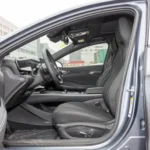
- DiLink and cabin interface: check screen language, Bluetooth, camera view, navigation, OTA menu, voice assistant and warning messages.
- Range-sales explanation: prepare a buyer note explaining CLTC range, local range, charging plan and climate impact.
- Body and paint: inspect headlights, taillights, glass, mirrors, roof, doors, trunk lid, paint finish and panel gaps.
- Export documents: confirm invoice, certificate, export declaration, customs paperwork, bill of lading plan and destination registration needs.
BYD Seal compared with Tesla Model 3, XPeng P7, Xiaomi SU7 and BYD Destroyer 05
BYD Seal vs Tesla Model 3: Tesla Model 3 is stronger in global brand recognition and software ecosystem awareness. BYD Seal competes through China-source pricing, Blade Battery, more traditional cabin controls, BYD brand strength and a clear value alternative for EV sedan buyers.
BYD Seal vs XPeng P7: XPeng P7 may attract buyers who focus heavily on smart cockpit and intelligent-driving identity. BYD Seal is easier to position for buyers who want BYD battery confidence, mainstream EV sedan value and a strong Tesla alternative.
BYD Seal vs Xiaomi SU7: Xiaomi SU7 has strong technology-brand attention and performance image. BYD Seal may be a more conservative choice for dealers who prefer BYD’s existing EV reputation, broader export familiarity and clearer sedan product ladder.
BYD Seal vs BYD Destroyer 05: Destroyer 05 is a DM-i plug-in hybrid sedan for fuel-saving and charging-optional markets. BYD Seal is a pure electric sport sedan for customers who are ready for full EV ownership and want a stronger Tesla Model 3-style comparison.
Who should choose BYD Seal as a China-source electric sport sedan?
Best for buyers who want a pure electric BYD sedan with sporty styling, 510/650/600 km range options, LFP Blade Battery, fast-charging capability, smart-driving versions and a more affordable alternative to Tesla Model 3 in many China-source export scenarios.
Best for dealers who need a recognizable EV sedan from BYD for private buyers, technology-focused customers and showroom EV comparison. The 510 version works as a lower-entry stock route, while the 650 and smart-driving versions create stronger premium explanation points.
Think twice if the buyer has weak charging access, wants gasoline-backed range, needs the lowest possible sedan price or expects full local software/service support without verification. In those cases, a DM-i sedan, a locally supported EV or a different BYD model may be more suitable.
FAQ about BYD Seal 2025 export from China
How much is the BYD Seal 2025 lowest FOB price from China?
The lowest FOB reference is about USD 26,800 from a China port for the 2025 BYD Seal 510 Intelligent Voyage Edition, depending on stock, color, production date, dealer source, export documents and port arrangement. This is not a CIF or landed price.
Which BYD Seal version is best for export buyers?
The 510 version is the lowest-cost route. The 650 version is better for range-sensitive buyers. Smart-driving versions are better for technology-focused customers, while the AWD version is for performance buyers.
Is BYD Seal 2025 a pure electric car?
Yes. BYD Seal 2025 is a battery electric sedan. Buyers who need gasoline-backed range should consider a DM-i sedan instead of Seal.
How is BYD Seal different from BYD Destroyer 05?
BYD Seal is a pure electric sport sedan. BYD Destroyer 05 is a DM-i plug-in hybrid sedan focused on fuel saving and charging-optional ownership.
Can BYD Seal charge outside China?
It depends on the destination market and charging hardware. Check the charging port, cable set, AC/DC charging behavior and whether a GB/T, Type 2 or CCS2 adapter plan is needed.
Does BYD Seal 2025 smart driving work outside China?
Some functions may depend on software, maps, calibration, online services and local road conditions. Check the exact vehicle’s ADAS menu, cameras, sensors and warning messages before export.
Is the 510 km version enough for daily use?
For city and suburban buyers with regular charging access, the 510 version can be enough. For longer highway use or range-sensitive customers, the 650 version may be easier to sell.
How does BYD Seal compare with Tesla Model 3?
Tesla Model 3 has stronger global software and brand recognition. BYD Seal competes through China-source pricing, Blade Battery, EV sedan practicality, traditional controls and BYD brand value.
What should be checked before importing BYD Seal?
Check VIN, exact version, battery pack, charging port, software language, ADAS hardware, wheels, tires, underbody, body condition, documents and destination-market charging compatibility.
Is BYD Seal suitable for dealer stock?
Yes, especially for dealers who want a recognizable BYD electric sedan to compare with Tesla Model 3, XPeng P7, Xiaomi SU7 and other EV sedans. Version selection should match local charging infrastructure and buyer budget.
Request BYD Seal 2025 FOB quote from China
To request BYD Seal 2025, send your target country, preferred 510 / 650 / smart-driving / AWD version, color, budget, shipping route and intended use through contact us. You can ask for the lowest 510 version FOB quote, 650 km range comparison, smart-driving hardware check or Tesla Model 3 alternative recommendation.
We can help check available BYD Seal vehicles in China, confirm VIN, trim, battery pack, production date, charging port, DiLink interface, ADAS hardware, wheel and tire condition, body photos, export documents and FOB or CIF shipping plan.
For more choices, browse electric cars from China, BYD cars from China or review other new cars from China available for export.