2026 Chery Tiggo 8 China-Market Version Comparison| Specification | Comfort | Luxury | Premium | Flagship |
|---|
| Official China guide price | RMB 99,900 | RMB 109,900 | RMB 119,900 | RMB 129,900 |
| Limited China promotion reference | RMB 92,900 | RMB 99,900 | RMB 109,900 | RMB 119,900 |
| Estimated FOB China reference | From about US$16,500 | varies by exact vehicle, invoice path, stock location, export preparation and color |
| China model identity | fifth-generation Chery Tiggo 8 gasoline SUV, offered as Tiger or Leopard exterior route |
| Seat layout | 5 seats; do not describe this China-market fifth-generation Tiggo 8 as a 7-seat model |
| Tiger dimensions | 4,749 × 1,880 × 1,710 mm |
| Leopard dimensions | 4,725 × 1,880 × 1,705 mm |
| Wheelbase | 2,825 mm |
| Engine | Chery Kunpeng 1.6TGDI gasoline engine, SQRF4J16C reference |
| Output reference | 147 kW / 310 N.m reference |
| Transmission | 7-speed wet dual-clutch transmission |
| Drive system | front-engine, front-wheel drive |
| Suspension | front MacPherson independent / rear multi-link independent suspension |
| Fuel consumption reference | about 7.2 L/100 km WLTC reference, subject to trim and test condition |
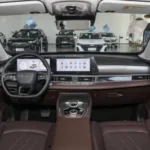
| Cockpit base | 15.6-inch 2.5K screen, 8155 chip | adds stronger comfort and safety package | higher cabin and wheel package | full comfort and air/sound package |
| Phone connection | HUAWEI HiCar, Apple CarPlay and CarLink reference on published highlights |
| Parking image | 540-degree panoramic image highlight from entry trim |
| Driver assistance | confirm exact functions by VIN | L2 driver-assistance highlight from Luxury trim upward |
| Airbags | confirm exact build | 6 airbags highlight | 8 airbags highlight | 8 airbags route, confirm by vehicle |
| Comfort value | screen, chip and camera value | sunroof, electric tailgate, 50W wireless charging | front heating/ventilation, driver massage and memory | passenger massage and legrest, active noise control |
| Export reading | lowest FOB anchor | best value balance | stronger photo and retail story | use when comfort features justify the landed price |
Price reading: the lowest public China guide price is RMB 99,900, but a China export quote should not simply copy the temporary local promotion. A practical FOB China reference starts from about US$16,500 for an entry fifth-generation Tiggo 8, before destination-side taxes, clearance and registration.
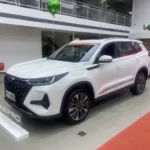
The 2026 Chery Tiggo 8 should not be written like an old seven-seat Tiggo 8 page. The current fifth-generation China-market car is a five-seat gasoline SUV with two exterior identities, Tiger and Leopard. That single fact changes the export positioning: this is not the cheapest way to buy a three-row Chery; it is the gasoline five-seat family route for buyers who want space, equipment and lower charging risk.
For current Chery export stock from China, the first sourcing question is therefore not “which seven-seat version?” It is whether the buyer wants Tiger or Leopard styling, then which of the four 1.6T trims gives enough visible value for the target market.
Do Not Mix Tiggo 8, Tiggo 8 PLUS and Fulwin T8
The Tiggo 8 name is easy to overuse in export listings. The fifth-generation Tiggo 8, the Tiggo 8 PLUS, the Tiggo 8 PRO and the Fulwin T8 plug-in hybrid are not the same procurement object. They may sit close in price, and some overseas markets also use Tiggo 8 names differently, but the China-side invoice, body layout, powertrain and buyer promise can change.
This page is for the fifth-generation gasoline Tiggo 8. If a customer asks for a 7-seat Chery, the PLUS or PRO route may be more relevant. If the customer asks for a plug-in hybrid, the Fulwin T8 / C-DM route needs separate battery, charging and export checks. Mixing those names on one quote can create a cheap-looking offer that later fails when the vehicle photos or documents arrive.
The Tiger / Leopard Choice Is Mostly a Sourcing Fingerprint
Tiger and Leopard are not two engines. Both sit on the same basic gasoline Tiggo 8 route, but the exterior and cabin presentation are different enough that they should be treated as sourcing fingerprints. Tiger is the more conventional family look, while Leopard is the sharper visual route. The dimensions also differ slightly: Tiger is 4,749 mm long and 1,710 mm high, while Leopard is 4,725 mm long and 1,705 mm high. Both use a 2,825 mm wheelbase.
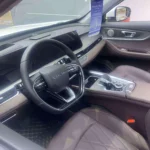
That matters for buyer evidence. A supplier may write “Tiggo 8 flagship” without saying Tiger or Leopard. Before taking payment, the buyer should see the front fascia, rear view, interior screen layout, VIN/nameplate evidence and exact trim photos. For this model, a small appearance mismatch can become a real retail problem because the buyer may have chosen the car mainly for its look.
The Powertrain Is the Conservative Reason to Buy It
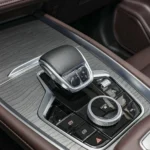
The 1.6TGDI gasoline engine and 7-speed wet DCT are the practical center of this page. This is not an 800V EV, not an EREV, and not a plug-in hybrid that depends on destination charging behavior. For markets where charging infrastructure, EV service training or high-voltage parts supply is still uneven, the Tiggo 8 is easier to explain than many China-market new-energy SUVs.
The benefit is not that it is technically simple in an old-fashioned way. It still has an 8155-based cockpit, panoramic camera functions, phone projection and L2 assistance on higher trims. The benefit is that the expensive ownership question is mostly gasoline powertrain service, not battery warranty, charging protocol, map support or overseas app access.
Owner feedback also gives the page a useful boundary. Space, value and power are usually the strengths people notice first. The softer points to manage are more ordinary gasoline-SUV issues: low-speed DCT feel, tire noise, wind noise and whether the high-comfort trim is worth paying extra for. That is actually good for export writing because the risks are understandable to traditional dealers.
The Middle Trims May Be Easier to Sell Than the Cheapest One
The Comfort trim is useful as the FOB anchor because it keeps the public entry price low while still carrying the large screen, 8155 chip, 540-degree image and phone connection highlights. It can work for price-led wholesale pages, but it may not be the easiest retail story once freight, tax and dealer margin are added overseas.
The Luxury trim is often the cleaner B2B recommendation because it adds features buyers can explain quickly: L2 assistance, six airbags, wireless charging, panoramic sunroof, electric tailgate and powered driver seat. These are visible enough for showroom photos and not too dependent on China-only software.
Premium and Flagship are better when the importer wants a high-equipment family SUV rather than a lowest-price Tiggo 8. Seat heating and ventilation, driver massage, stronger airbag count, ambient lighting, passenger legrest, air-quality package and active noise control make sense in warmer, traffic-heavy or family-use markets. They should be bought only when the destination buyer can pay for comfort, not simply because the trim name sounds higher.
Why This Page Should Stay Gasoline-Specific
The strongest keyword gap for this model is not “Chinese EV SUV.” It is a gasoline Chery SUV from China with a modern cabin and a lower learning curve for overseas dealers. That is why the official reference link should point to the Chery fifth-generation Tiggo 8 page, while the page text should stay careful about what belongs to the physical vehicle and what depends on the destination market.
Phone projection, cockpit language, navigation behavior, driver-assistance settings and connected functions may still vary after export. But compared with EV charging and battery-service questions, those are smaller retail risks. The Tiggo 8 is strongest when it is sold as a mature fuel SUV with a large five-seat cabin, not as a technology promise that the importer cannot support locally.