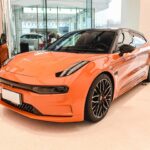
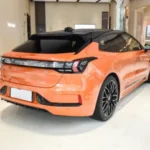
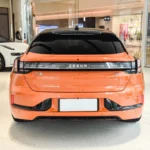
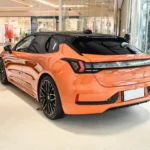
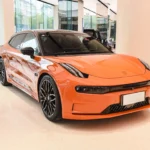
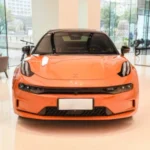
2026 Zeekr 001 China-Market Version Comparison
| Specification | 103 kWh RWD Max | 95 kWh AWD Max | 103 kWh AWD Ultra | 103 kWh AWD Ultra+ | 5th Anniversary Edition |
|---|
| Official China guide price | RMB 269,800 | RMB 269,800 | RMB 299,800 | RMB 329,800 | RMB 365,000 |
| Estimated lowest FOB reference | From approximately US$42,800 for available entry Max stock | depends on exact trim, production date, color and China-side export costs |
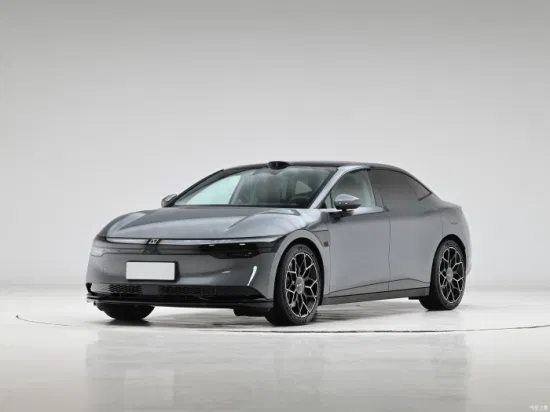
| Vehicle type | five-door, five-seat electric shooting brake |
| Steering position | left-hand drive |
| Electrical architecture | 900-volt high-voltage architecture |
| Battery capacity | 103 kWh | 95 kWh | 103 kWh | 103 kWh | 103 kWh |
| Battery route | Qilin-type NMC | Golden/Shield-type LFP | Qilin-type NMC | Qilin-type NMC | Qilin-type NMC |
| Drive system | rear-wheel drive | dual-motor all-wheel drive |
| Peak motor output | 370 kW | 680 kW |
| Peak torque | 535 N·m | 913 N·m |
| 0–100 km/h | 4.98 sec | 3.08 sec | 2.83 sec | 2.91 sec | 2.91 sec |
| CLTC electric range | 810 km | 710 km | 762 km | 730 km | 680 km |
| Fast charge, 10–80% | about 10 min | about 7 min | about 10 min | about 10 min | about 10 min |
| Maximum charging-rate route | up to 6C | up to 12C | up to 6C | up to 6C | up to 6C |
| Length × width | 4,977 × 1,999 mm |
| Height | 1,545 mm | 1,545 mm | 1,533 mm | 1,533 mm | 1,545 mm |
| Wheelbase | 3,005 mm |
| Curb weight | about 2,235 kg | about 2,470 kg | about 2,350 kg | about 2,440 kg | about 2,440 kg |
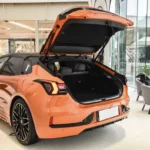
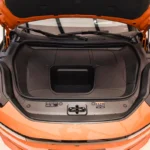
| Front luggage compartment | 31 litres |
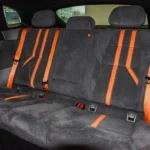
| Rear cargo capacity | approximately 740–2,144 litres depending on seat position |
| Aerodynamic coefficient | approximately 0.23 Cd | performance aero package |
| Front suspension | independent double-wishbone |
| Rear suspension | independent multi-link |
| Adaptive damping | variable damping control | variable damping plus height adjustment | manually adjustable KW performance suspension |
| Air suspension | not fitted | dual-chamber air suspension | not used; KW coilover route |
| Standard wheel route | 19-inch | 19-inch | 19-inch | 21-inch | 22-inch forged |
| Driver-assistance hardware | LiDAR-based sensor suite with NVIDIA DRIVE Thor-U computing platform |
| Automatic parking | included |
| Main reason to choose | maximum rated range and lower vehicle mass | AWD performance plus the fastest battery charging route | AWD performance with dual-chamber air suspension | air suspension plus richer comfort specification | limited performance package with KW chassis and track-focused equipment |
Estimated lowest FOB reference: from approximately US$42,800.
This is a China-export sourcing estimate for an available 2026 entry Max vehicle, not a Zeekr international retail price. Final pricing depends on the exact battery, drivetrain, production date, vehicle status and China-side export costs.
The 2026 Zeekr 001 creates an unusually clean decision at the bottom of its China price list. Two Max versions share the same RMB 269,800 guide price, yet one is a 103 kWh rear-wheel-drive long-range car and the other is a 95 kWh all-wheel-drive performance car with a different battery chemistry and faster charging route.
That makes the battery and drivetrain more important than the Max badge itself. Above them, the Ultra versions do not simply add cabin equipment: they introduce a different suspension concept, while the later 5th Anniversary Edition moves toward a dedicated performance-chassis specification rather than acting as a conventional luxury flagship.
The two RMB 269,800 Max versions solve opposite problems
The 103 kWh RWD Max is the range-oriented choice. Its single rear motor produces 370 kW and 535 N·m, while the larger NMC battery gives it an official CLTC figure of 810 km. It is also roughly 235 kg lighter than the 95 kWh AWD Max.
The 95 kWh AWD Max uses two motors producing a combined 680 kW and 913 N·m. Its official range falls to 710 km, but the LFP battery supports the most aggressive charging route in the regular lineup: under suitable high-power charging conditions, Zeekr quotes roughly seven minutes from 10% to 80%.
For an overseas buyer, this is not simply a choice between “long range” and “fast.” The 103 kWh RWD car makes more sense where motorway distance between charging stops matters most. The 95 kWh AWD car makes more sense where high-power chargers are actually available and acceleration or all-weather traction carries more value than the last 100 km of rated range.
Early owner experience also shows why the CLTC number should not be treated as a guaranteed motorway distance. One 103 kWh RWD Max owner reported more than 6,000 km of use at roughly 16.5 kWh/100 km overall and a dynamic range around 530 km, while noting that energy use rose noticeably between motorway speeds around 100 and 120 km/h. A separate 95 kWh AWD owner reported roughly 500 km of urban use and more than 400 km of motorway driving from a full battery with larger wheels. These are individual examples, not universal range figures.
Ultra is a chassis upgrade before it is a luxury upgrade
The normal Max versions already receive adaptive damping, so moving upward is not necessary simply to avoid a passive suspension. The more meaningful change arrives with the 103 kWh AWD Ultra and Ultra+, which add dual-chamber air suspension and height adjustment.
This matters on a car almost two metres wide and weighing well above two tonnes. The air-suspension versions can change body height as well as damping response, giving the driver more control over the balance between motorway stability, comfort and additional clearance.
The Ultra still keeps a relatively long 762 km CLTC figure despite the 680 kW AWD system. Ultra+ drops to 730 km as its equipment and wheel specification become more performance- and comfort-oriented. Neither car produces more peak motor power than the other, so the price difference should not be interpreted as another acceleration upgrade.
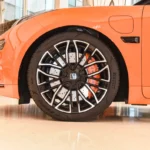
The 5th Anniversary Edition belongs in a different category again. It retains the 680 kW AWD powertrain and 103 kWh battery but replaces the air-suspension route with adjustable KW performance coilovers, 22-inch forged wheels, larger brakes and track-oriented software. Its 680 km CLTC figure and RMB 365,000 price reflect that performance focus. It is better understood as a limited specialist version than as the default “best” 001.
A China-market 2026 Zeekr 001 is not the same specification as an official overseas 001
Zeekr currently sells the 001 through official overseas channels, but the specifications shown on those regional sites are materially different from the 2026 China-market car. The European 001, for example, is listed with a 100 kWh battery, up to 400 kW in AWD form, 200 kW in RWD form and up to 620 km of WLTP range.
The Chinese 2026 model has moved to a 900-volt architecture, 370 kW rear-drive output or 680 kW AWD output, and 95 or 103 kWh battery packs. Its body is also listed at 4,977 mm long with a 3,005 mm wheelbase, while the current European specification remains a different homologated configuration.
That distinction matters more than the Zeekr badge. A China-spec car should not automatically be assumed to inherit the charging interface, warranty conditions, connected services, maps, app access or homologation status of an officially distributed Zeekr 001 in the destination country.
For markets that already have official Zeekr distribution, the China-sourced car therefore competes on specification and acquisition cost, while the local car competes on supported charging, software, warranty administration and regional service. Comparing only battery capacity or advertised range misses most of that difference.
Zeekr changed its cross-border software policy in July 2026
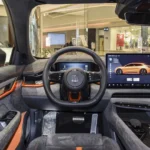
Software is unusually important for the 2026 Zeekr 001 because Zeekr publicly addressed a cross-border infotainment issue in July 2026. A vehicle used abroad had triggered an anti-theft security mechanism that restricted some infotainment functions. Zeekr stated that the protection did not disable the vehicle's core driving or braking systems.
The company subsequently added a “Cross-border Guardian” self-service unlock route to the Zeekr app and announced a further software switch that is intended to remain off by default unless the owner chooses to enable it before travelling abroad.
This is a meaningful improvement for cross-border use, but it does not remove every issue associated with permanent export. Owners of China-spec Zeekr vehicles outside China have separately discussed master-account ownership, app access, telematics and update availability. Those functions depend on the exact account and software state of the car rather than on motor or battery specification.
For a permanently exported 001, the useful distinction is therefore between functions embedded in the vehicle and functions that depend on the China digital ecosystem. The 900-volt powertrain, suspension hardware, cameras and basic driving systems travel with the car; account-dependent services, maps, cloud functions and future software access require more market-specific confirmation.
The official international Zeekr 001 specification can be compared on the Zeekr Europe model page. Other vehicles from the brand are listed in the Zeekr category.