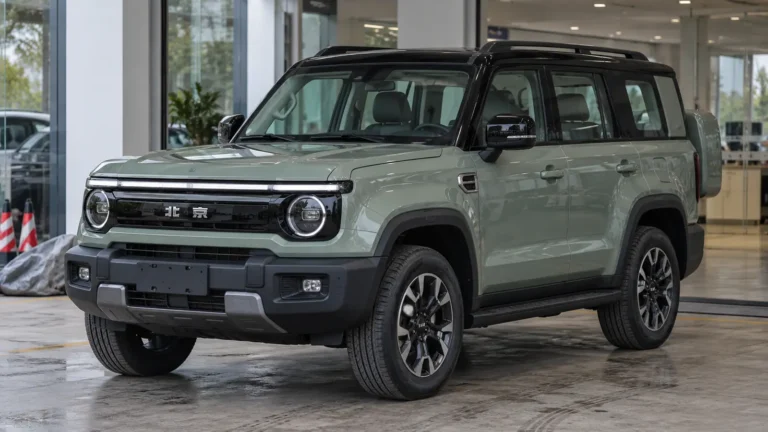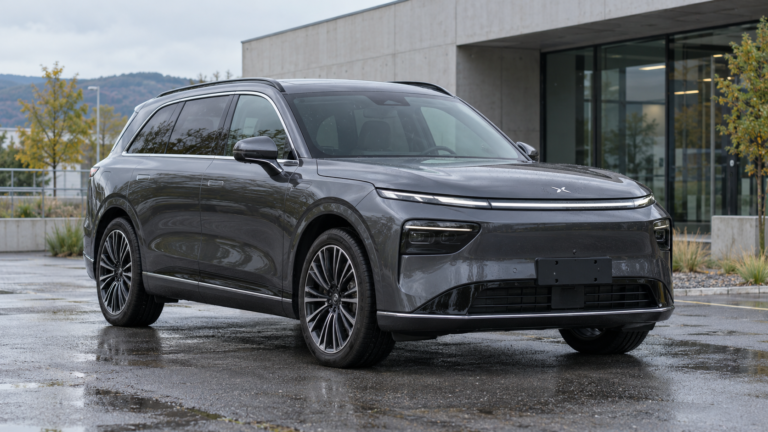
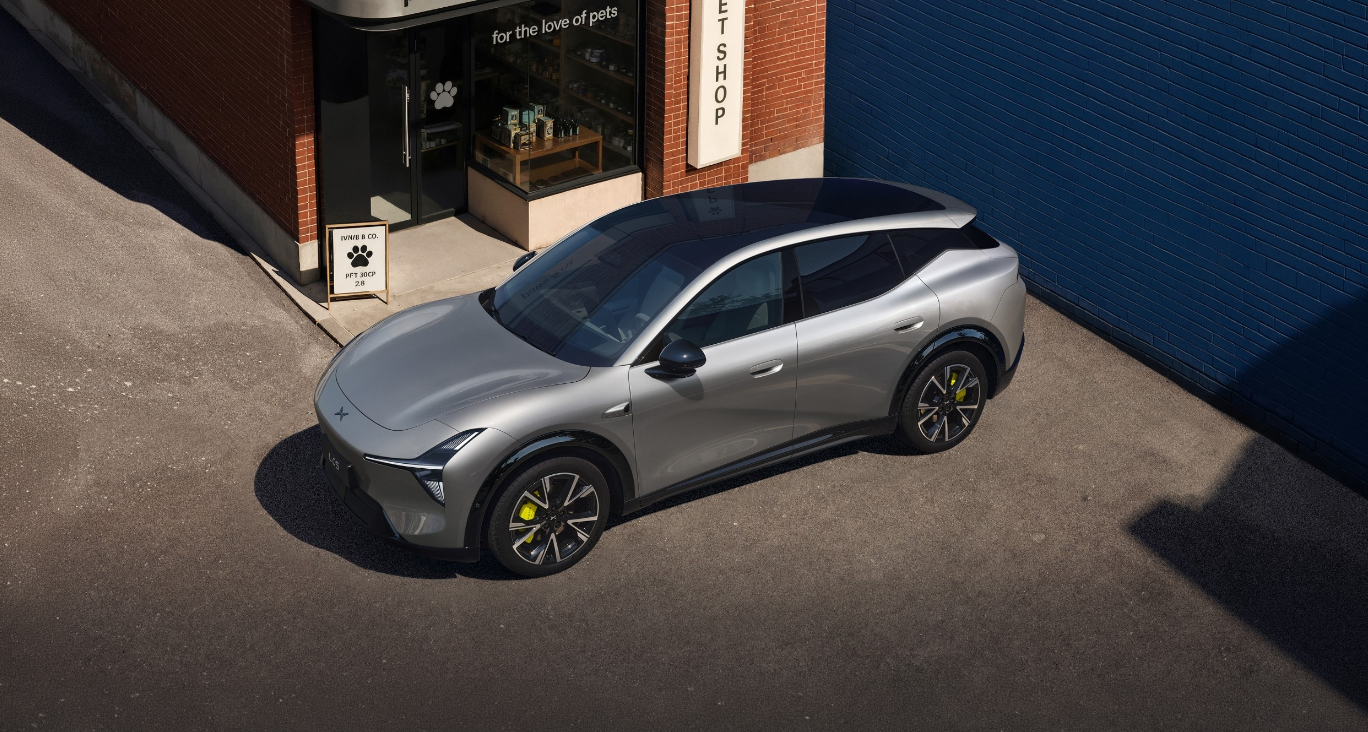
The XPENG MONA L05 went on sale in China on 29 October with four battery-electric versions and two range-extended versions. Chinese deliveries begin on 1 November, while reports of global shipments have already created a separate question for importers: which L05 is actually being offered—the newly launched China-market car, an official destination-market vehicle, or a Chinese vehicle moving through a parallel-export route?
The Trim Number Does Not Tell You Which Version Is Better
The launch range looks simple until the 560 Plus and 535 Max are placed side by side. Both use a 58.2 kWh lithium iron phosphate battery, yet the cheaper Plus carries the higher range number. The Max adds XPENG’s Turing computing hardware and a more capable driver-assistance package, so the version names describe different priorities rather than a straightforward low-to-high range hierarchy.
| China version | Powertrain | Battery | China-rated range | Guide price | Limited launch price |
|---|---|---|---|---|---|
| 560 Plus | Battery EV | 58.2 kWh LFP | 560 km CLTC | RMB 144,800 | RMB 139,800 |
| 535 Max | Battery EV | 58.2 kWh LFP | 535 km CLTC | RMB 154,800 | RMB 149,800 |
| 635 Max | Battery EV | 71.1 kWh LFP | 635 km CLTC | RMB 164,800 | RMB 159,800 |
| 635 Ultra SE | Battery EV | 71.1 kWh LFP | 635 km CLTC | RMB 176,800 | RMB 171,800 |
| 1310 Max | Range-extended EV | 37.2 kWh LFP | 310 km EV / 1,310 km combined CLTC | RMB 154,800 | RMB 149,800 |
| 1310 Ultra SE | Range-extended EV | 37.2 kWh LFP | 310 km EV / 1,310 km combined CLTC | RMB 166,800 | RMB 161,800 |
Three Versions of the Same Buying Decision
560 Plus: price-led EV
The entry version is aimed at buyers who want the body size and electric drivetrain without paying for the full Max or Ultra assisted-driving package. It may suit a price-sensitive fleet, but a dealer should not advertise it using Max-level software claims.
635 Max: longer-range EV
The larger 71.1 kWh battery and Max computing package make this the more balanced EV proposition where dependable charging and electric-vehicle service support already exist. The 635 km figure remains a CLTC rating, not an overseas range warranty.
1310 Max: charging-flexible EREV
The 37.2 kWh battery provides a quoted 310 km of electric driving before the 1.5-litre generator becomes relevant. It reduces dependence on public chargers but adds fuel-system servicing, emissions documentation and engine-parts requirements.
All six Chinese versions use rear-wheel drive. The traction motor is rated at up to 183 kW, while the range-extended models add a 1.5-litre petrol generator. The EREV’s quoted 1,310 km is a combined full-fuel-and-full-charge result; it should not be described as battery range.
The L05 Is Large for Five Seats—and That Is the Point
At 4,870 mm long, 1,930 mm wide and 1,636 mm high, with a 2,940 mm wheelbase, the L05 occupies more road space than a compact crossover but keeps a five-seat cabin. XPENG quotes 702 litres behind the rear seats and up to 1,913 litres with the second row folded. Battery-electric versions add a 102-litre washable front compartment.
That layout is useful for families, airport-transfer work and executive fleets that value luggage capacity and rear-seat room. It is less suitable for an operator whose revenue depends on carrying six or seven passengers. The point is easy to miss when launch coverage focuses almost entirely on range and computing power.
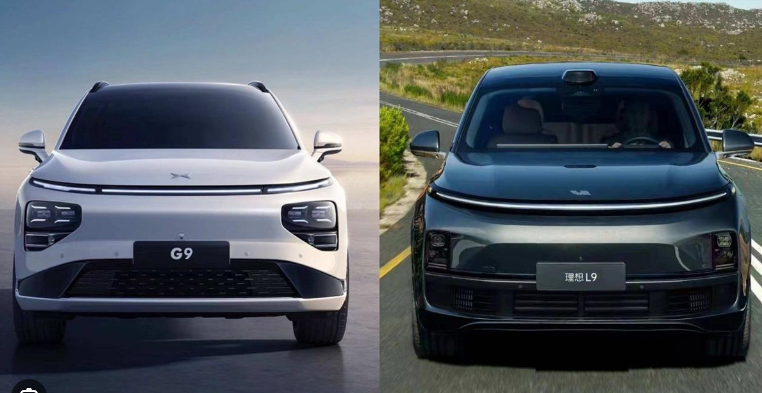
Buyers comparing other recently introduced XPENG SUVs can also review our XPENG G9L launch and import analysis . The two models serve different commercial roles: the L05 is the lower-priced volume model, while the G9L sits in a larger and more expensive segment.
“Global Shipment” Needs Three Footnotes
XPENG says the L05 was developed with international use in mind. The company cites 660 test vehicles, more than five million kilometres of testing across 25 countries and regions, and development against Chinese, European and Australian safety standards. Separate reports say global shipments have started and that left- and right-hand-drive development ran in parallel.
Those are meaningful signs of a genuine overseas programme. They still leave three commercial questions unanswered:
- Which countries receive the first vehicles? A broad market target is not a destination-by-destination delivery schedule.
- Which powertrain goes to each market? A country may receive the battery EV, the range extender, or only selected versions.
- Is the quoted car an official export version? A China-market vehicle obtained through a trader is not automatically identical to a vehicle supplied through XPENG’s local distribution network.
Overseas-market names also need confirmation. XPENG has previously removed the MONA label from the global name of the L03, but that does not prove the new model will automatically be called “XPENG L05” everywhere. Until a destination-market product page or approval document is available, import paperwork should follow the exact model identification attached to the vehicle.
China-Market AI Hardware Can Lose Value After Export
The Max versions use one XPENG Turing AI chip, while Ultra SE versions use two. Chinese launch material links these versions to different levels of VLA-assisted driving. This creates a visible reason to pay more inside China, but hardware count alone does not establish overseas functionality.
Maps, mobile data, user accounts, app binding, voice services, OTA updates and assisted-driving functions can depend on the software region and destination regulations. Before an importer pays the difference for Max or Ultra SE, the supplier should demonstrate the actual vehicle’s active menus, language options and account status.
The 180-Day Question Starts With Registration Status
The statement “a MONA L05 must wait 180 days before export” is too broad. China’s current rule is aimed at vehicles exported through the used-car channel after being registered domestically. It does not place every factory-new vehicle or manufacturer export shipment into one mandatory waiting period.
In practice, a trader unable to obtain the manufacturer confirmation may need to wait until the registration period exceeds 180 days. That commercial limitation is different from claiming that Chinese law prohibits every L05 from leaving China for six months.
What a Useful Supplier Quote Should Contain
A supplier offering the L05 should be able to answer more than “EV or EREV?” Before comparing prices, ask for:
- The full Chinese trim name and price basis. State whether the number is a Chinese guide price, limited retail promotion, dealer procurement reference, FOB quote or CIF estimate.
- VIN, production date and registration status. Confirm whether the vehicle is unregistered, dealer-registered or already titled, and record the exact registration date where applicable.
- The proposed export route. Identify whether it is an official export vehicle, a new vehicle supplied through another permitted channel, or a registered vehicle using the used-car procedure.
- Charging and fuel-system evidence. Verify the physical charging inlet, AC and DC limits, cable equipment and local charger compatibility. For the EREV, add fuel, emissions and engine-service checks.
- A live software demonstration. Record interface language, navigation, connectivity, app binding, OTA status and the assisted-driving functions that actually operate.
- Destination approval before shipment. Send the VIN-level technical file to the local broker or certification body instead of assuming that global testing guarantees registration.
Buyers can review current new-car sourcing options from China , but availability should be confirmed by exact version and vehicle status. A model appearing in a supplier catalogue is not proof that a compliant unit has already been allocated.
Check the Exact L05 Before Requesting Freight
Send us your destination country, preferred powertrain, steering position and quantity. We can check the China-side vehicle status, price basis and available documentation before preparing an FOB or CIF quotation for local review. Destination certification, registration and tax remain subject to your broker or competent authority.
Request an L05 sourcing checkSources and Verification Date
- XPENG: MONA L05 China launch announcement , 29 October 2026.
- XPENG: MONA L05 configuration table , accessed 1 November 2026.
- CnEVPost: reported start of MONA L05 global shipments , 26 October 2026.
- Chinese Government: used-vehicle export management notice , effective for the relevant 2026 export procedures.