Updated: September 2026
Import Cars from China to Chile: Homologation, Ports and VIN Checks Before Deposit
For Chile-bound orders, the real question is not whether a China FOB price looks low. The question is whether that exact VIN can pass Chile’s homologation path and still compete with the local official version after warranty, parts, software and resale are included.
Chile is not an empty import opportunity. Chinese brands already have strong visibility, official distributors, local buyers, EV momentum and owner communities. A China-sourced unit can still be a strong deal, but it must be checked against Chile’s 3CV process, used-vehicle restrictions, port route, local dealer stock and service reality before any supplier deposit is paid.
Buyer takeaway:
- Do not compare a Chile-bound vehicle only by FOB price. Compare total landed cost, 3CV feasibility, local warranty gap, parts and resale confidence.
- Used, demo or previously registered China stock needs extra caution because standard mainland Chile import routes generally favor new vehicles.
- For EVs, confirm the charging connector, software language, app status and high-voltage service route before shipment.
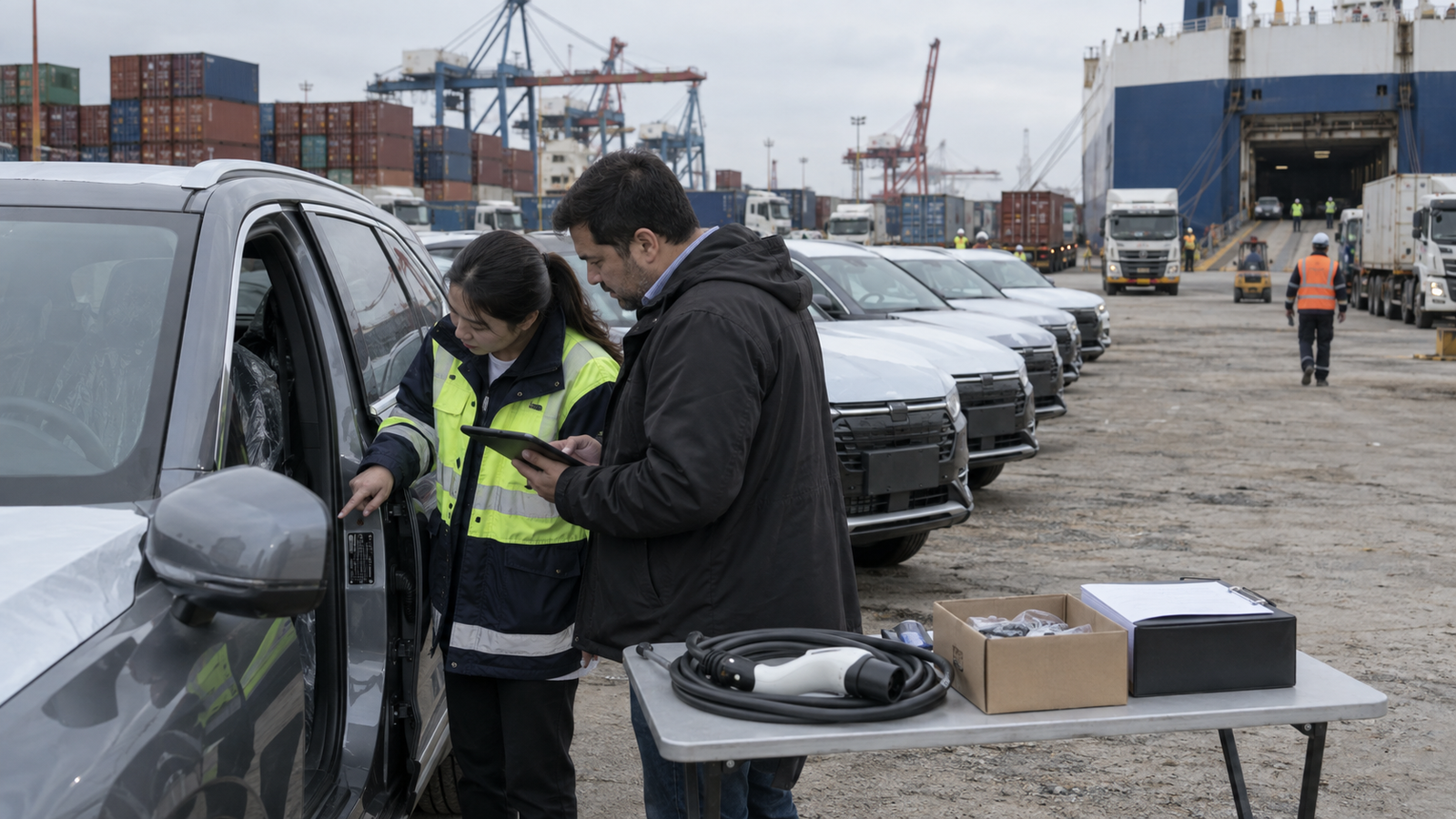
Bymotorcar’s role: Bymotorcar can support the China-side part of a Chile-bound order: vehicle sourcing, VIN and nameplate evidence, trim and mileage checks, PDI photos or videos, supplier coordination, export-readiness checks, China-side documents, parts-information requests and FOB/FCA/CIF handoff where available. Chile customs clearance, tax calculation, 3CV approval, homologation, registration, plates, insurance, local warranty, repair and spare-parts availability must be confirmed by the buyer’s Chilean broker, importer, homologation adviser, freight forwarder, insurer and service partners.
Chile Is a Mature Chinese-Car Market, Not an Empty Import Opportunity
Chile is already one of Latin America’s most important reference markets for Chinese vehicle brands. That changes the sourcing question. A buyer is not asking whether Chileans will accept Chinese vehicles for the first time. The harder question is whether a China-market VIN is better than the Chile-market official version that may already exist.
That matters for dealers, traders and fleet buyers. If MG, BYD, GWM, Changan, Geely, Chery or another Chinese brand already has official visibility in Chile, the parallel-import comparison becomes stricter: price, model year, trim, battery, software, warranty, parts, financing and service support must all be compared line by line.
A China-sourced unit can still make sense when it offers a specific trim, battery, body type, delivery window or batch price that local stock cannot match. But if the local official vehicle is close in total cost and easier to service, the China FOB saving may not be a real advantage.
San Antonio, Valparaíso or Iquique: Port Route Before Deposit
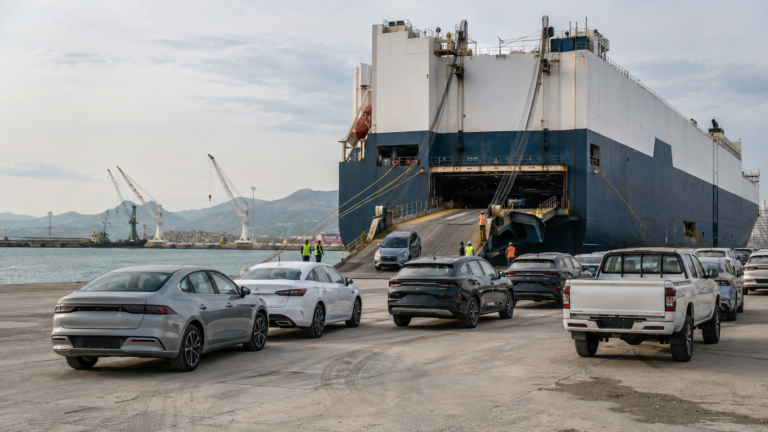
San Antonio and Valparaíso are the main port names most Chile-bound vehicle buyers will hear. They matter for standard mainland logistics, document timing, inland movement and port cost planning. Iquique is different: it is tied to ZOFRI and special free-zone logic, not a universal shortcut for bringing used cars into the rest of Chile.
Before deposit, the buyer should know which route is realistic for the exact vehicle and buyer status. A supplier’s FOB quote from China does not answer that question. A CIF quote may also hide details if insurance, port handling, demurrage or document responsibility are unclear.
Ask the forwarder or Chile-side port agent to confirm:
- whether the shipment should move by container, Ro-Ro or another method;
- whether San Antonio, Valparaíso, Iquique or another port is appropriate for the case;
- who controls marine insurance and port storage risk;
- who prepares bill of lading instructions;
- whether invoice, consignee, VIN and shipping documents will match exactly;
- what happens if documents arrive late or the vehicle needs additional inspection.
Bymotorcar can coordinate China-side handoff and supplier documents. It cannot guarantee vessel space, transit time, Chile port release or free-zone eligibility.
Homologation and 3CV: The Local Partner Should See the VIN Early
Chile’s 3CV path is the part buyers should not leave until arrival. A vehicle that looks good in China still needs Chile-side review for homologation, emissions, safety, documentation and registration feasibility.
The local partner should not review only a brochure or model name. They should review the exact VIN, trim, production date, emissions information, technical file and market version. A China-market configuration may not be identical to the Chile official version, even if the exterior name looks similar.
Before payment, ask a Chile 3CV or homologation adviser to review:
- VIN and nameplate photos;
- model year, production date and version;
- new, demo, used or registered status;
- emissions and safety documentation;
- certificate of origin and technical specification sheet;
- whether the vehicle is light, medium, commercial, bus, pickup or another class;
- what documents must be translated, legalized or apostilled;
- whether that exact configuration can be registered in Chile.
If the adviser cannot review the unit before shipment, the buyer is taking a compliance risk that no China supplier can remove later.
Used, Demo or Registered China Stock Requires Extra Caution
Chile is a high-risk destination for “almost new” wording. A supplier may describe a vehicle as new because the mileage is low. Chile may not view it the same way if the car was previously registered, used as demo stock or exported as low-mileage used stock.
This is especially important for discounted China-market inventory. A registered vehicle may look attractive on price, but the buyer must check two layers before deposit: China-side export readiness and Chile-side new-versus-used classification.
For any discounted, demo or registered unit, request:
- odometer photo and PDI video;
- production date and first-registration record if any;
- supplier statement on whether the car was ever registered in China;
- export documents or export-readiness proof;
- written refund or substitution terms if Chile-side eligibility fails.
Iquique or ZOFRI should not be treated as a universal workaround. Free-zone rules, residents, movement restrictions and exceptions must be checked by the Chile-side broker before money is sent to China.
Local Official Stock Changes the FOB Comparison
Chile’s official distributor environment changes the math. A China vehicle that is cheaper at FOB level may still lose after freight, insurance, duty/VAT calculation, 3CV work, documentation, local service uncertainty, warranty gap and resale discount are included.
The practical comparison should look like this:
| Question | Why it matters in Chile |
|---|---|
| Is the same model sold officially in Chile? | The local version may have warranty, parts and known registration support. |
| Is the China trim actually different? | A price gap may only reflect different battery, motor, ADAS, year or equipment. |
| Will local dealers support the VIN? | Parallel-import VINs may not be covered by official warranty or service campaigns. |
| Is the total landed cost still attractive? | FOB savings can disappear after homologation, tax, freight, delay and parts risk. |
China sourcing is strongest when the buyer can prove a real advantage after all of these checks, not before them.
What Vehicle Types Actually Fit Chile
Chile is not one vehicle use case. A Santiago dealer, a northern mining fleet, a hotel shuttle operator and a logistics company do not need the same vehicle. The right China-sourced model depends on route, terrain, charging, service and resale.
| Buyer type | Possible fit from China | Chile-specific check |
|---|---|---|
| Santiago dealer | SUVs, crossovers, selected EVs and hybrids. | Local official equivalent, 3CV path, Spanish software and warranty gap. |
| Mining or construction fleet | Pickups, buses, light commercial vehicles. | Durability, desert use, parts pipeline, tyres, cooling and downtime cost. |
| Hotel or tourism shuttle | MPVs, vans, EV vans or minibuses. | Passenger registration category, route-based charging and service plan. |
| Logistics company | Vans, small trucks and delivery vehicles. | Payload, homologation class, brake/suspension parts and fleet maintenance. |
This is why a model ranking is less useful than a buyer-fit check. A rare China-market trim may look attractive, but a simpler vehicle with known service support may make more money in Chile.
EVs and Hybrids: Strong Potential, But Connector and Service Checks Matter
Chile’s EV market is moving faster, especially around Santiago and fleet operations. Electric buses already show that controlled charging can work at scale. For private resale outside major urban areas, the decision is less simple.
For a China-market EV or PHEV, the buyer should confirm more than range and battery size. Charging connector, adapter safety, AC/DC charging behavior, software language, mobile app access, high-voltage service and battery warranty must all be checked before deposit.
Request evidence for:
- charging-port photos and the cable package;
- whether the car uses GB/T, CCS2 or another connector setup;
- tested charging behavior with the planned local charging equipment;
- battery capacity, cooling system and 12V battery specification;
- Spanish or English software screen;
- high-voltage service and diagnostic plan in Chile.
EVs can be strong for depot-charged taxis, corporate fleets, shuttle routes and urban buyers. For buyers without controlled charging or local EV service, hybrid or gasoline stock may be safer.
Spanish Software, App Access and Smart-Car Functions
Software is not a small comfort feature in Chile. A vehicle with Chinese-only menus, China-region app binding, unsupported maps or OTA errors can become hard to sell, hard to explain and hard to support.
This is not something to check after arrival. Ask the China supplier for live evidence from the exact vehicle:
- language menu showing Spanish or English;
- instrument cluster and infotainment software version;
- map and navigation screen;
- CarPlay or Android Auto status if claimed;
- mobile app binding and region setting;
- OTA screen without region errors;
- ADAS demonstration for camera, lane assist and adaptive cruise if equipped;
- charging interface video for EV or PHEV models.
If the supplier can only show Chinese brochure photos, the buyer has not verified the vehicle for Chile. They have only verified that a similar car exists in China.
Service, Warranty and Parts Before Price
Chile’s strong official Chinese-brand presence makes warranty and service a default part of the buyer’s comparison. A local official car may cost more at the start but give the buyer a clearer route for warranty, maintenance, spare parts and resale.
A China-market VIN may need a different plan. The buyer should know whether local workshops can service it, whether the official distributor will accept the VIN, whether parts can be matched by OE number, and who pays if a warranty issue appears.
Before payment, clarify:
- which local workshop can service the vehicle;
- whether parts can be identified by VIN, not only model name;
- whether key body parts, lamps, sensors and glass are locally available;
- who handles warranty parts and labor;
- whether EV battery, inverter or ADAS diagnostics can be done locally;
- how much downtime the buyer can tolerate.
A low FOB price is only a margin if the car can be sold, registered, repaired and trusted after arrival.
Chile Pre-Deposit Checklist for China-Sourced Vehicles
The checklist should answer one Chile-specific question: will this exact China-market car be importable, homologable, registerable, serviceable and commercially sellable in Chile?
- Exact vehicle: VIN, nameplate, production date, trim, mileage, market version and status.
- New-versus-used: first-registration record, demo status and whether Chile will treat the unit as importable.
- 3CV path: technical data, emissions evidence, safety equipment, homologation adviser review and possible CHI-e path.
- Cost path: Chile-side calculation for duty, VAT, green/emissions tax if applicable, port charges, homologation and registration.
- Port route: San Antonio, Valparaíso, Iquique or another route, Incoterms, insurance, B/L and consignee match.
- Documents: invoice, packing list, certificate of origin if needed, export declaration, technical specification sheet and any legalized/apostilled title documents where required.
- EV and software: connector, cable, adapter plan, Spanish or English UI, app/OTA status, maps and ADAS behavior.
- Condition: PDI photos, PDI video, odometer, underbody, tyres, spare wheel, tools and charging cable if applicable.
- After-sales: local service partner, parts route, diagnostic method, warranty terms and downtime plan.
- Exit clause: refund or substitution terms if export, 3CV, customs or registration review fails for that VIN.
Red Flags Before Paying a China Supplier
- No VIN or nameplate photo before deposit.
- The supplier says Chile customs or 3CV is “easy” without local confirmation.
- The seller promises Chile registration or plates from China.
- The car is called new but was previously registered in China.
- No odometer proof, PDI video or status evidence.
- Unclear emissions, technical file or conformity documents.
- China-market EV with unverified connector or charging plan.
- Software is shown only in Chinese, with no Spanish or English proof.
- No local workshop, diagnostic route or parts channel.
- A local official version exists with warranty and similar total cost.
- Iquique or ZOFRI is described as a shortcut without confirming eligibility.
- Invoice, consignee, bill of lading and VIN data do not match.
- No refund clause if export, homologation or registration fails.
- The deal depends on under-invoicing or informal customs shortcuts.
When several of these signs appear together, the buyer is no longer negotiating a better price. They are absorbing risks that belong in the pre-deposit review.
What Bymotorcar Can Verify on the China Side
Bymotorcar is most useful before the buyer commits money. We can help identify vehicles in China, collect VIN and nameplate evidence, confirm trim and market version, check mileage and status, request PDI photos and videos, coordinate with suppliers and prepare China-side export documents.
For Chile-bound orders, we can also request battery or engine data, charging-port photos, software-language evidence, parts information, service notes where available and export-readiness details for the exact VIN.
This gives the Chile-side broker, homologation adviser, service partner and buyer better evidence before shipment. It does not replace Chile customs clearance, tax calculation, 3CV approval, homologation, registration, local warranty, repair, insurance, spare-parts availability or official distributor support.
FAQ: Import Cars from China to Chile
If a Chinese brand already sells officially in Chile, is there still a reason to source from China?
Yes, sometimes. China sourcing may make sense when the exact trim, battery, seating layout, commercial configuration, delivery window or batch price is clearly better than the Chile official option after total landed cost and service risk are included.
Does Chile’s used-vehicle restriction affect low-mileage or demo China stock?
It can. A supplier’s “new” description is not enough. The buyer should check first-registration status, mileage, Chinese export readiness and Chile-side classification with a customs broker or homologation adviser before deposit.
Why does 3CV need the exact VIN early?
Because the Chile-side review depends on the exact vehicle configuration, not only the model name. Trim, emissions, safety equipment, market version and technical documents can differ between China-market and Chile-market vehicles.
Is Iquique a general import route for all China-sourced vehicles?
No. Iquique is linked to ZOFRI and special free-zone logic. It should not be treated as a simple route to import used vehicles into mainland Chile without confirming eligibility and movement restrictions.
Will a China-market EV charging connector work in Chile?
Do not assume it. Many China-market EVs use GB/T connectors, while local infrastructure may require another setup. The buyer should confirm connector type, adapter strategy, AC/DC charging and local service support for that exact vehicle.
What happens if documents are not legalized, apostilled or consistent?
The shipment can face delay, detention or additional review. Invoice, consignee, bill of lading, VIN, title documents and certificate of origin should be checked before the vehicle leaves China.
Should EV buyers outside Santiago consider hybrid or gasoline instead?
Often yes, unless they control charging and have a clear service plan. EVs are strongest where charging, maintenance and high-voltage support are planned in advance.
What can Bymotorcar do before I pay a China supplier?
Bymotorcar can help collect China-side evidence: VIN, nameplate, PDI, trim, mileage, status, battery or engine details, software proof, charging-port photos and parts information so your Chile-side partners can review the exact vehicle before shipment.
Sources and Further Reading
- Autocosmos Chile: 2025 new-car sales and China-origin share
- ANAC Chile: automotive market studies
- Subsecretaría de Transportes: 3CV homologation for light and medium vehicles
- ChileAtiende: individual homologation for direct-import vehicles
- Chile Customs: used-vehicle import restrictions and free-zone/franchise context
- Chile Customs: free-zone vehicle pass procedure
- IEA Global EV Outlook 2026: Chile public charging infrastructure
- iContainers: Port of San Antonio shipping documentation context
Check a Chile-Bound Vehicle Before Deposit
Planning to source Chinese SUVs, EVs, pickups, vans or commercial vehicles for Chile? Send Bymotorcar the target model, quantity, intended use, destination port or city, and any requirements from your Chilean broker or 3CV adviser.
We can help collect China-side evidence for the exact VIN: nameplate, production date, trim, mileage, status, PDI photos or videos, battery or engine data, charging connector, software-language proof and parts information where available. Your Chile-side partners should then confirm customs, tax, homologation, registration, port release, warranty, repair, insurance and local service for that vehicle.