As the global market share of Chinese vehicles continues to climb, South America has emerged as a crucial growth engine. Driven by geopolitical shifts and economic restructuring, Venezuela’s demand for highly reliable and cost-effective Chinese cars is experiencing explosive growth.
If you are a parallel importer, overseas distributor, or international trading company, understanding the latest policies, true tax costs, and operational details of importing Chinese cars to Venezuela is the key to capturing this blue-ocean market. This article breaks down the current state of the Venezuelan auto market, the latest comprehensive tax matrix, customs document requirements, and standard operating procedures.
Analysis of the Venezuelan Automotive Market
While Venezuela’s economy has stabilized in recent years, its domestic auto manufacturing supply chain remains weak. The local vehicle fleet is aging rapidly, creating an urgent need for replacement vehicles.
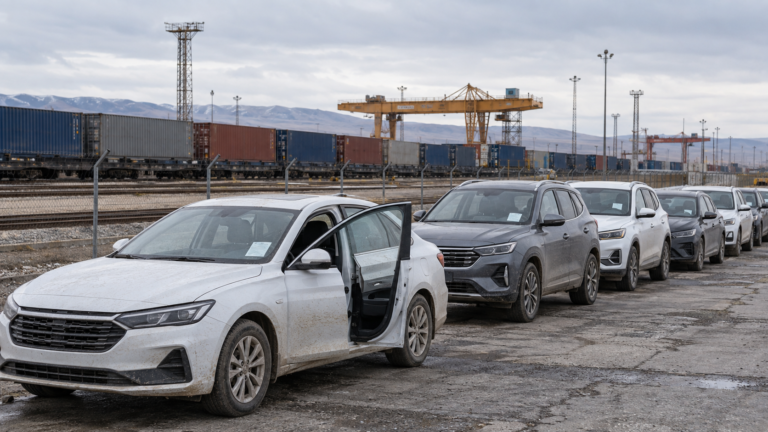
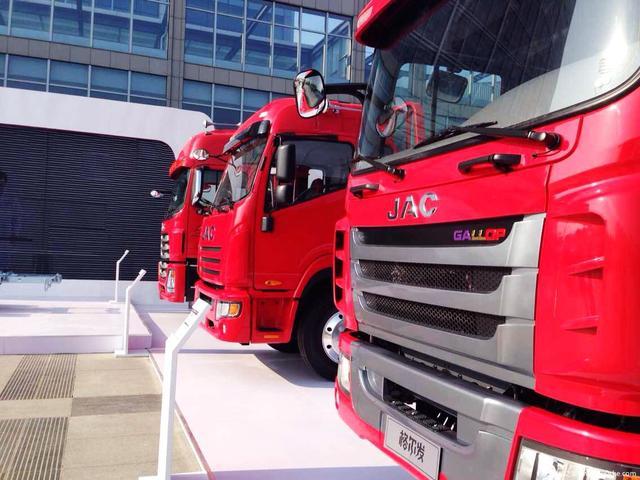
- Chinese Brands Dominate: Brands like Changan, Chery, JAC, and BYD have become ubiquitous on Venezuelan streets, thanks to their exceptional cost-performance ratio and improving after-sales service.
- Passenger and Commercial Vehicle Demand: Compact SUVs, economy sedans, and light commercial vehicles (such as pickup trucks and minivans) for logistics are the absolute mainstays of the market.
- RMB Cross-Border Settlement (CIPS): To circumvent traditional international settlement risks, bilateral B2B trade between China and Venezuela increasingly utilizes direct RMB settlement. This significantly reduces exchange rate risks and collection difficulties for Chinese exporters.
In-Depth Analysis of China-Venezuela Auto Import & Export Policies
Before initiating large-scale B2B vehicle trade, understanding the policy baselines and true tax costs of both countries is essential for calculating profit margins and controlling risks.
1. Chinese Auto Export Policies
China is actively encouraging the export of vehicles (especially New Energy Vehicles and high-standard ICE vehicles). Enterprises only need legitimate import/export operational rights and must apply for formal Export Licenses and Customs Declarations to clear vehicles smoothly. For eligible used and parallel import vehicles, China has completely opened the market with standardized management.
2. Venezuela Comprehensive Tax Matrix (SENIAT Customs)
Venezuelan customs applies a compound taxation method for imported vehicles. After calculating the CIF cost, importers must prepare for the following taxes:
- Import Duty (Arancel de Aduanas): Tariff rates vary drastically based on vehicle type and engine displacement. Passenger cars (Sedans/SUVs) typically face high tariffs, generally between 35% – 40%. Commercial vehicles (Pickups, trucks, cargo vans) face lower tariffs of 10% – 20% due to their utility status.
- Value Added Tax (IVA): A flat rate of 16%. The calculation base includes not only the CIF value (FOB Price + Freight + Insurance) but also the Import Duty amount already assessed.
- Luxury Tax (Impuesto a los Grandes Patrimonios): For luxury passenger cars or large-displacement SUVs exceeding a specific high-value threshold (Aduana Valuation), customs levies an additional 10% – 15% luxury tax.
- Customs Fees (Tasa Aduanera): Usually around 1% of the dutiable value. (Note: The Venezuelan government is promoting new energy adoption. Importers of pure electric vehicles (EVs) may benefit from phased tariff reductions or exemptions. Exporters should monitor SENIAT for the latest decrees.)
3. Technical Access and Homologation Barriers
Beyond financial costs, technical compliance is another rigid hurdle in the Venezuelan market:
- SENCAMER Quality Certification: All imported vehicles must comply with regulations set by the Venezuelan Autonomous Service of Standardization (SENCAMER) and COVENIN national standards. This requires core components like tires, safety glass, and seatbelts to possess international or equivalent certifications.
- INTT Homologation (Homologación): Before a vehicle can be legally sold and registered, it must pass environmental and road safety approvals from the National Institute of Land Transportation (INTT). Chinese exporters must fully support importers by providing detailed English/Spanish Technical Data Sheets and standard VIN stamping rubbings.
Core Process of Importing Chinese Cars to Venezuela
Successfully shipping vehicles from Chinese ports to Puerto Cabello or La Guaira in Venezuela requires tight supply chain coordination.
- Source Confirmation & Certification Matching: Once a buyer selects a target model, they must verify with the Chinese exporter that the vehicle meets INTT homologation requirements.
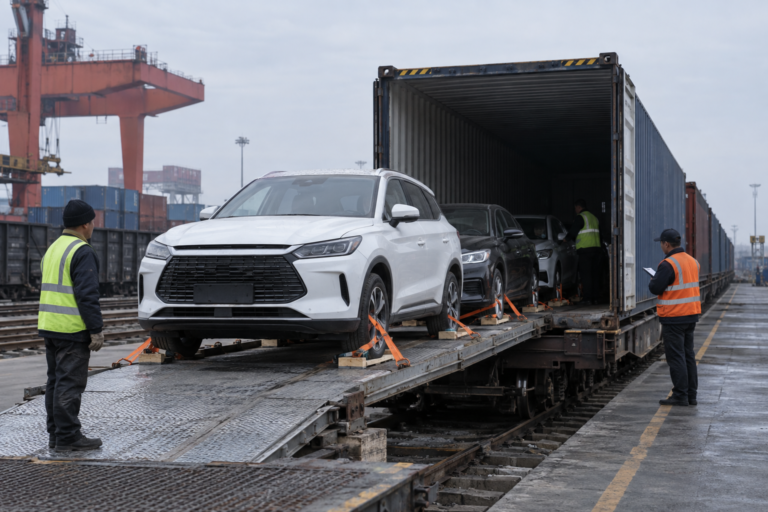
- Quota Application & Shipping: Venezuelan importers must apply for an auto import quota in advance. For logistics, buyers can choose Ro-Ro (Roll-on/Roll-off) or Container shipping. Given the frequent shortage of direct Ro-Ro space to South America, loading 2-3 vehicles into a 40HQ container is currently a highly efficient and flexible B2B logistics solution.
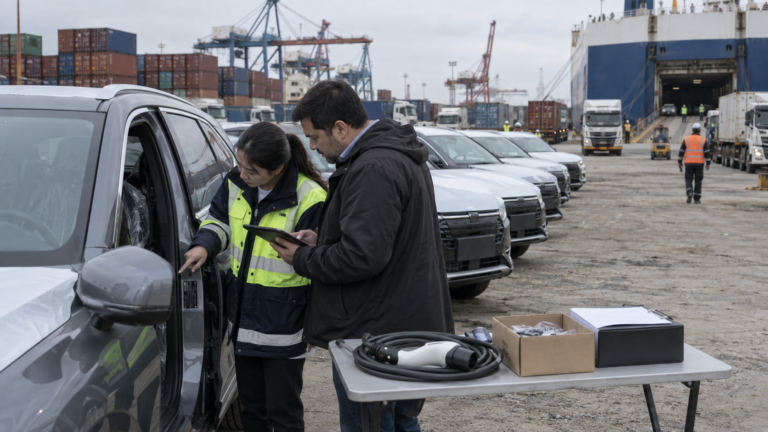
- Customs Clearance & Tax Payment: Upon arrival, a customs broker submits the full set of documents to SENIAT, completes the inspection, and pays the applicable “Duty + IVA + Luxury Tax”.
- Inland Transport & Distribution: With the customs release note and INTT certification, vehicles are transported via trailer to dealer showrooms in major cities like Caracas and Maracaibo for legal registration.
Essential Customs Clearance Document Checklist
The accuracy of documentation directly determines the release time and customs valuation in Venezuela. The following documents are strictly required:
- Commercial Invoice & Packing List: Must detail the unit price, VIN, engine number, net weight, and gross weight.
- Bill of Lading (B/L): The document of title for international ocean freight.
- Certificate of Origin: Proves the vehicle is manufactured in China; this is a critical basis for customs tariff determination.
- Certificate of Conformity (COC): Used to support SENCAMER and INTT compliance reviews.
- Tax Registry (RIF): The Venezuelan buyer must possess a legitimate import qualification and corporate tax identification number.
Conclusion
Although the Venezuelan market presents complex tariff tiers and INTT certification thresholds, its massive demand for vehicle replacement offers immeasurable commercial opportunities for Chinese exporters. By accurately managing tax calculations and proactively mitigating certification barriers, the B2B trade link for importing Chinese cars to Venezuela can be exceptionally smooth.
If you are looking for a stable, high-quality supply of Chinese vehicles and require professional support with customs documentation and container stuffing, we invite you to explore our extensive vehicle matrix for the latest export quotes and logistics solutions.
View our inventory of Chinese passenger and commercial vehicles for the Venezuelan market:https://bymotorcar.com/products/
Official INTT vehicle homologation requirements:http://www.intt.gob.ve/