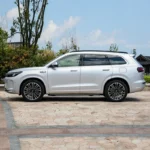
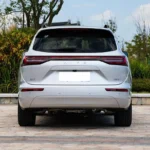
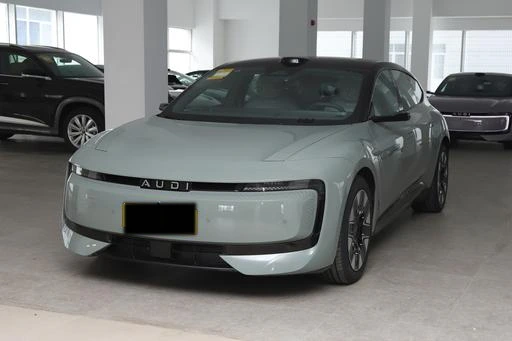
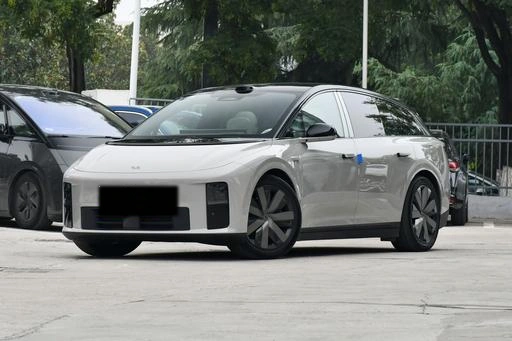
2026 AITO M7 from China — EVR and BEV versions for export buyers| Buyer Data | EVR Pro+ AWD | EVR Max Long Range | EVR Ultra AWD | BEV Max Long Range | BEV Ultra AWD |
|---|
| China guide price | 279,800–299,800 RMB | 309,800–329,800 RMB | 349,800–369,800 RMB | 329,800–349,800 RMB | 369,800–389,800 RMB |
| Estimated FOB reference | from US$41,600 | from US$46,000 | from US$52,000 | from US$49,000 | from US$55,000 |
| Export role | Lowest practical AWD family version | Best long-distance EVR route | High-spec EVR with stronger comfort and ADS appeal | Best pure-electric range route | Top BEV spec for premium buyers |
| Energy type | Range-extended EV | Range-extended EV | Range-extended EV | Battery electric vehicle | Battery electric vehicle |
| Body type | Large intelligent SUV | Large intelligent SUV | Large intelligent SUV | Large intelligent SUV | Large intelligent SUV |
| Seats | 5 or 6 | 5 or 6 | 5 or 6 | 5 or 6 | 5 or 6 |
| Steering position | Left-hand drive | Left-hand drive | Left-hand drive | Left-hand drive | Left-hand drive |
| Length | 5,080 mm | 5,080 mm | 5,080 mm | 5,080 mm | 5,080 mm |
| Width | 1,999 mm | 1,999 mm | 1,999 mm | 1,999 mm | 1,999 mm |
| Height | 1,780 mm | 1,780 mm | 1,780 mm | 1,780 mm | 1,780 mm |
| Wheelbase | 3,030 mm | 3,030 mm | 3,030 mm | 3,030 mm | 3,030 mm |
| Curb weight | about 2,540–2,680 kg | about 2,540–2,680 kg | about 2,600–2,680 kg | about 2,530–2,680 kg | about 2,530–2,680 kg |
| Battery capacity | 53.4 kWh on long-range EVR route; verify exact trim | 53.4 kWh | 53.4 kWh | 100 kWh | 100 kWh |
| Battery supplier reference | CATL | CATL | CATL | CATL | CATL |
| CLTC electric range | 208 km reference | 327 km long-range reference | 315 km reference | 710 km reference | 635 km reference |
| CLTC combined range | up to 1,510 km depending on seat layout | up to 1,690 km | up to 1,625 km | not applicable | not applicable |
| WLTC electric range | 175 km reference | 265 km reference | 255 km reference | not listed for EVR | not listed for EVR |
| Fast charging | 15 min, 20–80% reference | 15 min, 20–80% reference | 15 min, 20–80% reference | 15 min, 30–80% reference | 15 min, 30–80% reference |
| Range extender | 1.5T GDI four-cylinder | 1.5T GDI four-cylinder | 1.5T GDI four-cylinder | None | None |
| Fuel requirement | 95 RON or above | 95 RON or above | 95 RON or above | Not applicable | Not applicable |
| Fuel tank | High-pressure tank, trim-dependent | 65 L high-pressure tank on long-range route | 65 L high-pressure tank | Not applicable | Not applicable |
| Drive mode | Forced EV / EV priority / smart / fuel priority | Forced EV / EV priority / smart / fuel priority | Forced EV / EV priority / smart / fuel priority | Pure electric | Pure electric |
| Drive layout | Dual-motor AWD | Single-motor RWD | Dual-motor AWD | Single-motor RWD | Dual-motor AWD |
| Front motor | 165 kW AC induction | None | 165 kW AC induction | None | 160 kW AC induction |
| Rear motor | 227 kW permanent magnet synchronous | 227 kW permanent magnet synchronous | 227 kW permanent magnet synchronous | 227 kW permanent magnet synchronous | 227 kW permanent magnet synchronous |
| Motor torque reference | front 243 N·m / rear 320 N·m | rear 320 N·m | front 243 N·m / rear 320 N·m | rear 320 N·m | front 277 N·m / rear 320 N·m |
| 0–100 km/h | 5.2 s | 8.2 s | 5.1 s | 7.8 s | 4.7 s |
| Top speed | 200 km/h | 190 km/h | 200 km/h | 200 km/h | 200 km/h |
| Front suspension | Double-wishbone independent | Double-wishbone independent | Double-wishbone independent | Double-wishbone independent | Double-wishbone independent |
| Rear suspension | Five-link independent | Five-link independent | Five-link independent | Five-link independent | Five-link independent |
| Frunk | No frunk | No frunk | No frunk | 145 L reference | 145 L reference |
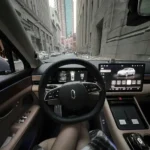
| ADAS route | Huawei ADS 5 enhanced tier | Huawei ADS 5 high-tier depending LiDAR package | Huawei ADS 5 high-tier | Huawei ADS 5 high-tier depending package | Huawei ADS 5 high-tier |
| LiDAR configuration | 192-line or 896-line package depending trim | 192-line or 896-line package depending trim | 192-line or 896-line package depending trim | 192-line or 896-line package depending trim | 192-line or 896-line package depending trim |
| Cabin highlights | Harmony cockpit, family comfort focus | Large range, refrigerator/warmer, HUD options | Higher comfort and entertainment options | Cleaner BEV cabin and frunk utility | Top BEV cabin and ADS package |
| Best buyer profile | Importer needing range confidence and AWD | Family buyer in markets with weak charging network | Premium buyer wanting EVR plus Huawei tech | Buyer with reliable charging and BEV policy advantage | Premium BEV buyer accepting software and service checks |
| Main export caution | Service, software region, ADS activation | Range extender service and 95 RON fuel | Higher cost, LiDAR calibration, warranty transfer | Charging standard and 100 kWh battery documents | Highest cost, ADS/OTA, parts and local support |
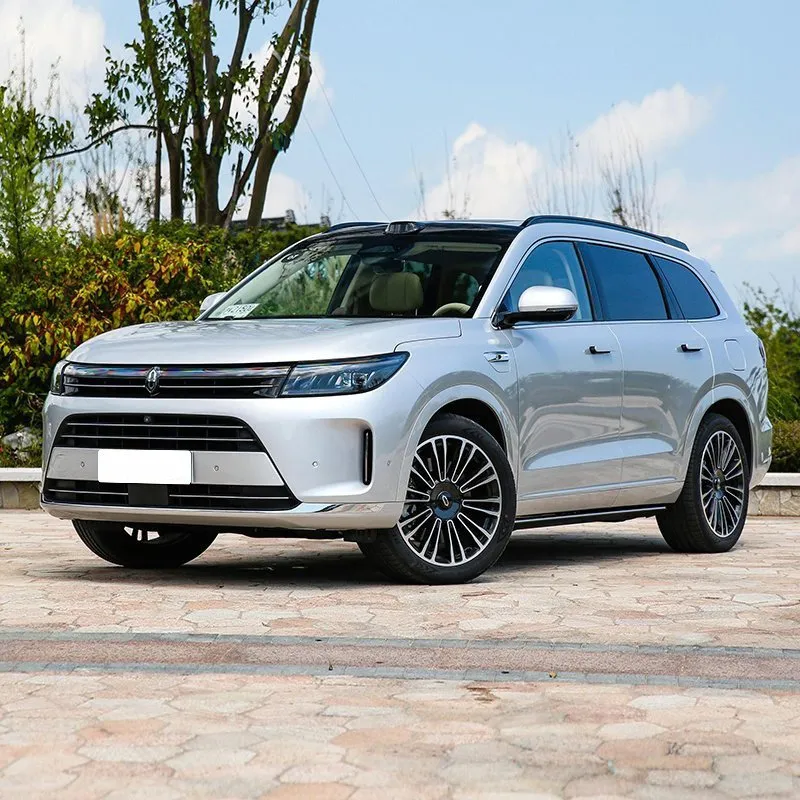
The estimated FOB reference for the 2026 AITO M7 from China starts from about US$41,600. Exact pricing depends on EVR or BEV powertrain, 5-seat or 6-seat layout, 192-line or 896-line LiDAR package, supplier discount, production date, port, inspection scope and export documents. Huawei ADS must be presented as driver assistance, not autonomous driving.
The 2026 AITO M7 from China is not just another large Chinese SUV. Its real export value comes from the combination of a family-size body, Huawei-backed smart cockpit, long-range EVR versions and 100 kWh pure-electric versions. For overseas buyers, the first decision is not “Max or Ultra”; it is whether the destination market is better served by a range-extended SUV or a battery-electric SUV.
Within AITO vehicles from China, the M7 sits in the zone where private family buyers, premium taxi operators, dealer showrooms and executive fleet customers may all be interested, but for different reasons. Selling every M7 as “Huawei smart SUV with long range” is too broad. The safer export strategy is to choose the energy route, seat layout and ADS/LiDAR package around the buyer’s actual market.
EVR makes more sense where charging is still uneven
The EVR versions are the practical export route for countries where fast charging is still patchy, intercity travel is common, or buyers are not ready to depend on public DC infrastructure. The long-range EVR Max route can reach up to 327 km CLTC electric range and up to 1,690 km CLTC combined range when fully fueled and charged. That is why the M7 is attractive in markets where buyers want an EV-like daily commute but still need fuel backup for long trips.
The tradeoff is that an EVR is not a maintenance-free EV. The 1.5T GDI range extender uses 95 RON or above fuel, and buyers must understand oil, filters, generator operation, emissions rules and range-extender service. In forum-style buyer discussions, the common concern is not whether range extension is useful; it is whether fuel consumption, NVH and local service can stay acceptable once the car leaves China.
BEV is cleaner, but not automatically safer for export
The BEV M7 is a cleaner story for markets with EV incentives, stronger charging networks and buyers who prefer zero-fuel ownership. The Max Long Range version can reach up to 710 km CLTC, while AWD BEV versions trade part of that range for stronger acceleration and a more premium spec. For a city with reliable home charging and DC corridors, the BEV M7 can be easier to explain than the EVR.
But the BEV route needs stricter export checks. A 100 kWh battery means higher battery value, stricter document expectations, charging-standard verification and more pressure on destination-country service capacity. If the buyer’s country lacks reliable EV diagnostics or compatible charging, the EVR version may create fewer problems even if the BEV looks more modern on paper.
Five seats and six seats solve different buyer problems
The five-seat M7 is better for families that need luggage space, airport transfer use or executive travel with fewer passengers. The six-seat version is more attractive for large families and private chauffeur scenarios, but it changes the cargo discussion. Export buyers often ask for “six seats” because it sounds premium; the real question is whether the buyer needs people space or luggage space.
For dealers, this distinction matters. A six-seat Ultra AWD looks strong in a showroom, while a five-seat EVR Max Long Range may be easier to live with for a private user who drives long distances and carries luggage. The product page should not push the most expensive seat layout by default.
Huawei ADS is the headline, but not the warranty
Huawei ADS 5 is a major reason the M7 gets attention, especially on Max and Ultra versions with advanced LiDAR configurations. However, AITO’s own wording makes the boundary clear: ADS is driver assistance, not autonomous driving, and some functions may require OTA support or paid activation. For an export buyer, that sentence is more important than the sensor count.
Before payment, the exact vehicle should be checked for ADS tier, LiDAR package, software version, language availability, navigation dependency, account activation and whether key features will work in the destination country. A 896-line LiDAR unit may be attractive, but if the buyer cannot use the software stack properly overseas, the extra cost may not convert into real value.
Overseas support is improving, but not universal
AITO has started building an export foothold in the Middle East through a UAE dealer partnership, which is a positive signal for the brand’s international direction. That does not mean every destination country has official sales, delivery, warranty and aftersales support. A buyer in the Gulf may face a different support environment from a buyer in Latin America, Africa or Central Asia.
For B2B sourcing, this should be handled directly. Ask whether the buyer expects official warranty, local parts supply, software support, roadside assistance or simply a China-sourced unit with export documents. Those are different transactions. Bymotorcar can help verify the China-side unit and export documents, but destination warranty and registration must be handled with the local importer or buyer.
What buyer discussions reveal
Owner and forum discussions around AITO products often focus on three themes: waiting time and rapid model updates, aftersales confidence, and whether EVR still has a long-term advantage as BEV charging improves. Those concerns are useful for export writing because they force a more honest sales angle. The M7 should not be sold only as a “longest range” SUV; it should be sold as a specific answer to a specific market problem.
If the buyer lives in a market with weak charging but good gasoline availability, EVR Long Range is the stronger story. If the buyer lives in a market with EV incentives, strong chargers and low electricity cost, BEV Max Long Range becomes cleaner. If the buyer asks for Ultra only because it is the top trim, slow the conversation down and confirm whether the local service network can support it.
Export recommendation
For most export inquiries, start with EVR Max Long Range or BEV Max Long Range. The EVR route is better for mixed city and long-distance use, while the BEV route fits buyers with charging confidence and a clearer zero-emission policy advantage. Ultra should be quoted to buyers who understand the cost of ADS/LiDAR, premium comfort options and local service risk.
For official model reference, use the AITO M7 model page and the HIMA M7 configuration page. Before shipment, verify VIN, production date, exact trim, seat layout, LiDAR package, charging port, fuel requirement for EVR, battery documents, PDI photos, software language and export paperwork.